
By ZACH LAIRD, InDepthNH.org
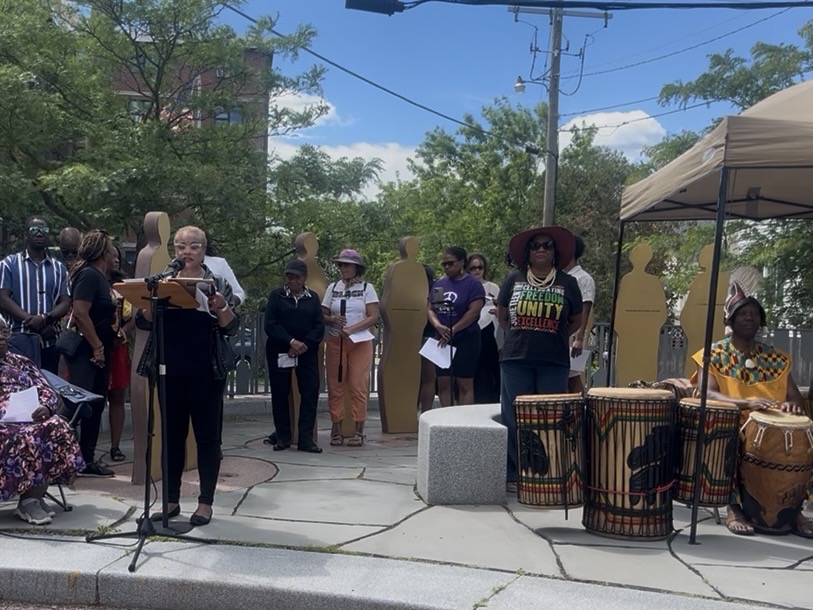
PORTSMOUTH, NH — Hundreds of people rallied outside the African Burying Ground Memorial on Friday morning to celebrate Juneteenth alongside the 250th anniversary of the Declaration of Independence, hosted by the Black Heritage Trail of New Hampshire.
The day began with a 0.8 mile march from Kittery, Maine to the memorial. After the crowd arrived, music from local groups such as the Akwaaba Ensemble, the Leftist Marching Band, Seacoast Wheelers, and the Ruff Ryders sparked the start of the festivities, followed by speeches that highlighted the historical importance of the holiday.
While Juneteenth is the oldest known nationally celebrated event commemorating the end of slavery in the United States, it wasn’t officially recognized in the state until former Governor Chris Sununu signed legislation that designated June 19 as Juneteenth.
“Together, we gather on this sacred ground, Portsmouth African Burying Ground, a place that calls us to remember, to honor, and to tell the truth. We can’t be here and not know the history of our country. This Juneteenth is especially significant; we celebrate not only the emancipation of the enslaved African Americans, but also the 250th anniversary of the signing of the Declaration of Independence. As our nation reflects on the promise that all men are created equal, we stand here in the shadow of a history that reminds us that those words were not written for everyone,” said JerriAnne Boggis, executive director of Black Heritage Trail of New Hampshire.
Boggis continued that in 1779, 20 enslaved men in Portsmouth petitioned for their freedom and for all of the enslaved. She said they declared that “they hoped that the name of slave may not be heard in a land gloriously intended for the sweets of freedom.”
“While others fought for independence from a distant king, these men demanded independence from slavery itself. They understood the contradiction; they believed that liberty belongs to everyone. Today we honor that courage, we honor the 179 enslaved Africans whose names we will read today,” Boggis said, referring to the slaves who lived locally.
Per its mission statement, the BHTNH works to promote awareness and appreciation of African American history and life in order to build more inclusive communities today.
The event also featured a Native American blessing with music and drums from the Cowasuck Band of the Pennacook-Abenaki People.

“Today, we gather not only to celebrate the holiday, but to honor a journey, a journey of pain and perseverance, a journey of bondage and breakthrough, a journey of survival, faith, and freedom. Juneteenth reminds us of June 19, 1865 when enslaved African Americans in Galveston, Texas finally received the news that they were free, more than two years after the Emancipation Proclamation had already been signed,” Rev. Rose Marie Pete from the North Star A.M.E. Zion Church said.
Pete said the African Burying Ground Memorial stands as a testimony that “their lives matter, their struggles matter, and their faith matters.”
“Some buried here lived through the painful reality of slavery, while others experienced freedom during a difficult and uncertain time in African history… Juneteenth teaches us that freedom should never belong to just one people, it is a blessing meant for everyone,” Pete said.

ZACH LAIRD photo
U.S. Sen. Jeanne Shaheen, D-NH, said the phrase of the Declaration of Independence “that all men are created equal” was written while slavery existed in every American colony, including New Hampshire.
“The gap between those ideals and that reality shaped much of our nation’s history, and yet Black Americans continue to contribute to their communities, to serve the country, and push the nation closer to its founding ideals,” Shaheen said.
Research from the Northeast Slavery Records Index (NESI) states that approximately 3,000 enslaved people fled their enslavers and enlisted and fought in the Revolutionary War on the British side. About 5,000 Black soldiers, many of whom were slaves, enlisted on the Continental side to earn their freedom, or were enlisted as substitutes for their enslavers. As of 1790, NESI estimates that there were approximately 710 enslaved people living in New Hampshire.