By GARRY RAYNO, InDepthNH.org
CONCORD — A program intended to be the access point for those with substance abuse addiction to services and treatment, did not collect enough data to determine its effectiveness, a performance audit found.
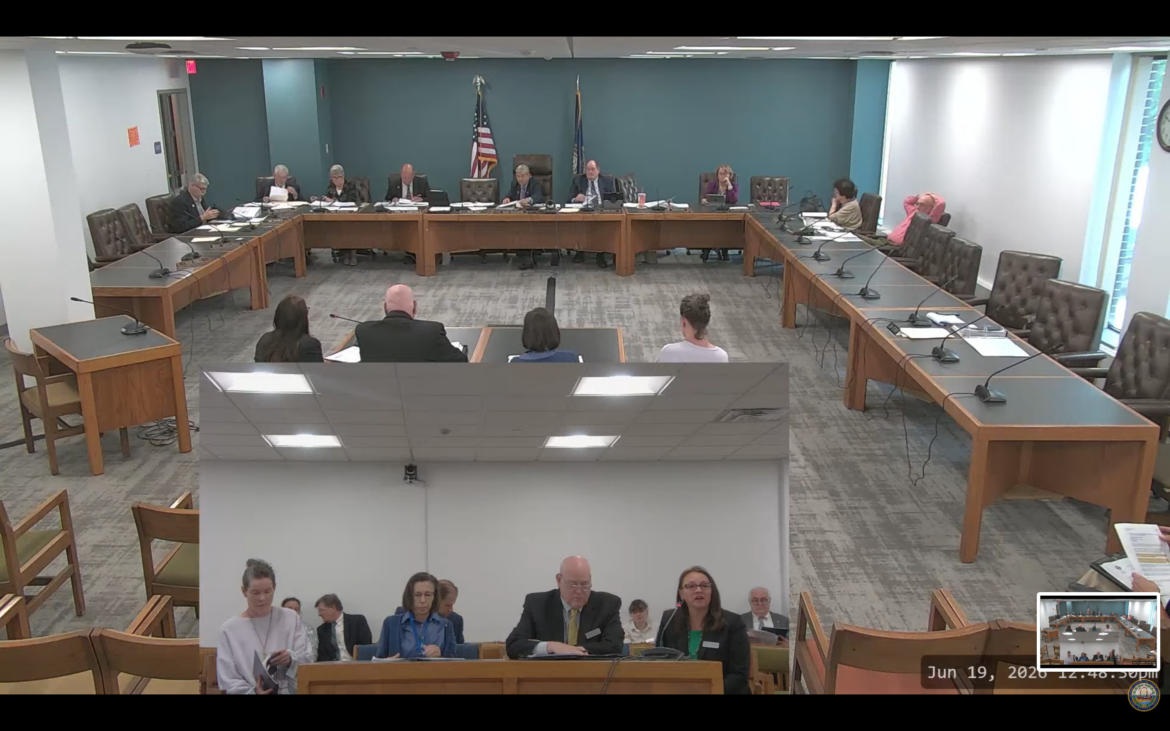
Discussed Friday before the Joint Legislative Fiscal Committee, the performance audit by the Legislative Budget Assistant found “the Doorway Program needs to implement a number of changes to improve its program monitoring and better measure its effectiveness in assisting people with obtaining treatment for their substance use disorders.”
The program is largely funded by federal grants along with some state money from the Governor’s Commission on Addiction, Treatment, and Prevention.
The Department of Health and Human Services contracts with nine hospitals throughout the state to serve as “doorways” to treatment and services.
The nine hospitals provide screening, evaluation, referrals, and coordination of clients, but the agency failed to establish comprehensive policies and procedures for monitoring the program or one model of care resulting in inconsistencies, according to the audit.
Administratively, the program suffered from insufficient management controls, unleveraged client data, and a protracted reimbursement process, the auditors found.
But they note, DHHS staffing levels and employee turnover hampered the agency’s ability to adequately manage the program and effectively oversee doorway contractors.
During fiscal years 2022 to 2024 the Program spent more than $27 million, while serving an average of 1,805 clients a year.
John Clinch, LBA Senior Audit Manager, told the committee “We were unable to find an expected success rate for addiction recovery programs, so we could not compare the results of the program to any recognized standards or benchmarks.”
He noted while addiction is a chronic disease, one measurement is a change in a person’s quality of life.
Using federal data reported by the program, auditors determined clients’ quality of life improved by 45.5 percent of clients after six months, while the successful completion rate was 16.5 percent.
“These results were based on a non-random subpopulation that had data available to analyze and should not be projected to the entire population,” Clinch warned.
The auditors had 12 observations suggesting improvements in the program, urging both the agency and the governor’s commission to establish comprehensive formal policies and procedures to govern and monitor the program.
The auditors found the governor’s commission, which supplied state funding when federal funding did not cover for some clients, did not make required reports on its finances or allocations or activities.
“By not reporting as required, the Governor, the Legislature, and stakeholders may not have had the information needed to make informed decisions,” the auditors wrote.
The auditors also found that monthly statistical reports filed by the program were not accurate and often incomplete.
“Nearly every monthly report published during the audit period included errors or omitted certain program data.”
The auditors also found that the program was not complying with federal reporting requirements.
“We also found the Program did not comply with federal Government Performance and Results Act data collection requirements due to low client interview response rates and incomplete monthly statistical reports submitted by the nine doorway locations statewide,” according to the audit.
They suggested the agency use a new interview survey developed by the federal Substance Abuse and Mental Health Services Administration with scheduled follow-up interviews in six months.
The auditors also found the agency was late reimbursing its contractors for services.
The agency fully concurred with 10 of the 12 observations and concurred in part with two others.
Senate President Sharon Carson, R-Londonderry, noted a section of the audit that dealt with similar programs that provided some of the same services: the certified community behavioral health clinics and the regional public health networks.
She said she would like to see more information to determine if the programs could be consolidated.
The legislature is always looking for ways to save money, she said, maybe consolidating services is the way to go.
Katja Fox, the Director of the Division of Behavioral Health at the DHHS, said that both the doorway and certified community health programs address substance abuse disorder. Combining substance abuse treatment and mental health is relatively new to New Hampshire, she said and is part of a move to better integrate services.
“There is more to come as we evolve the doorway program,” she said, noting the doorway program began when the state was facing an opioid addiction crisis.
“As we move forward, we will look at integrating all these services,” Fox said, “so someone does not have to go to five different places instead of a whole health approach.”
Carson also suggested data should be available to determine how many people who use the doorway program are there because they relapsed after they were clean for a time.
How many people are repeat clients, she asked.
Clinch said that is the kind of information that is in a person’s medical record which is protected information under HIPAA.
He said the auditors did not have access to that information.
The Doorway Program was established in January 2019 for substance use disorder screening, evaluation, referrals, and care coordination. The program established a statewide network of regional hubs for opioid use disorder treatment and recovery support services using federal grants.
The concept was similar to programs in Manchester and Nashua that used fire stations as entry points into treatment and services. Someone who decides he or she needs help could safely go to the fire stations and be directed to treatment programs.
Many advocates say the state’s biggest hurdle to treatment and recovery is the lack of available treatment beds when someone decides he or she needs help.
The committee is expected to discuss the program again at its October meeting.
Garry Rayno may be reached at garry.rayno@yahoo.com.