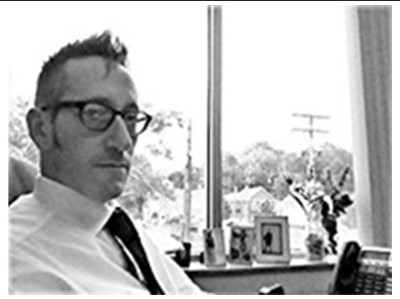
Editor’s Note: We welcome back Radio Free New Hampshire. Michael Davidow took a few months off from his column to finish his latest novel “Interdiction” about a veteran cop in a small New Hampshire town who shoots and kills a college student in a traffic stop gone awry. The ensuing investigation presents a tale of drug dealing, gunplay, and justifiable homicide. The lawyers are in control. The police are waiting and watching. The sole civilian witness to this killing is under indictment herself and silent regarding what she saw. The state’s most powerful politicians line up behind their officer. Only one thing stands between him and exoneration: another cop from another small town who begins to question what happened that night. His past has called him to his own separate truth.” It is awesome and available on Amazon.
By MICHAEL DAVIDOW, Radio Free New Hampshire
Tom Wolfe published “Radical Chic” in 1970, telling how musician Leonard Bernstein gave a fundraiser for the Black Panthers at his penthouse in Manhattan. He basically belittled Lenny for being a patsy. The assembled guests are either confused or hopelessly square.
This work also contains an early mention of anti-Zionism as left wing dogma – the far left wing, that is, as represented by the Panthers themselves.
Wolfe attributed the Panthers’ hatred of Israel to several different factors. First, America backed Israel while the Soviets backed Egypt; so if you believed in socialism, like the Panthers, you fell in line. Second, the Panthers deemed Arabs to be of color, while they called Israelis white (an argument based less on skin tone than political expediency). And third, the Panthers did not pretend otherwise: they were profoundly anti-semitic.
They wanted Jews out of Harlem, they wanted to banish Jews from the civil rights movement, in which they had been historically prominent, and as Wolfe notes in passing, they wanted Jews to die, fantasizing openly about killing them on the streets. Such sentiments were hard for Lenny’s friends to ignore. Wolfe remained sanguine, though. “In the most Literate circles of the New Left, well, the Panthers’ pronouncements on foreign affairs couldn’t be taken too seriously.”
Six years later, novelist Saul Bellow felt otherwise. Writing about visiting Israel in 1976, he commented that “the Arabs enjoy a significant advantage in the sympathies of the left,” which fact he attributed to the legacy of Viet Nam and the growing influence of Marxism in academia. He suggested to an Israeli friend that his country “had better give some thought to the media intelligentsia in the United States,” but his friend demurred. He had bigger fish to fry.
That was fifty years ago. Israel had just barely escaped destruction in the Yom Kippur War, a United Nations assembly packed with newly freed colonies and soaked in Arab propaganda had already voted that Zionism was racism, and future rock-thrower Edward Said was already teaching at Columbia. His work came to epitomize the jaundiced scholarship of post-colonial studies which in turn came to infuse nearly every aspect of the liberal arts, eventually inspiring the DEI movement.
The Panthers’ view of foreign affairs didn’t simply survive. It ended up dominating an entire sector of American culture: our colleges. And through our colleges, it came to dominate Lenny’s own circle: the sensitive, the ones who care, the ones who really want people to get along. The poison at its core grew silently for decades.
One generation after another, the young prove deeply conservative at heart. They want more than anything to stay young. They want the purity of their childhood to last into their adult years. They want to stop growth and change in an existential way. They have no truck with moral compromise. They don’t need to. They don’t have bills to pay.
This strain of romantic puritanism first entered politics in that awful time, the 1960’s, when the horrors of Viet Nam were being presented daily on teevee. Students protested to stop it. I used to envy that generation, that had so much important work to do: stopping evil, basically. That must have felt satisfying.
Yet whether that war was misguided or not, there was nothing especially evil about the people who fought it and nothing especially good about the people who wanted to stop them. Protestors carried the day in both academia and journalism, though; many were drawn to those fields, so open to idealists and so resistant to practicality; and they never stopped believing in their own moral superiority.
Donald Trump’s presidency offers so many newsworthy events that it’s hard for your columnist to keep up (“things are in the saddle and ride mankind,” Emerson observed in the 1840’s). No sooner do I consider writing about Trump’s begging for a jet plane from one of our dodgier allies, than he banishes vaccines for kids, he invades California with troops, he marches the army down Pennsylvania Avenue for his birthday. For all his failures, he has succeeded in two main things: making it difficult to track his mistakes because he makes so many of them, and making it boring to hear about them, because the criticism all sounds the same.
One challenge becomes sorting through the smashed pieces he leaves behind and finding the through-line that existed before him and will stay in place after him. Perhaps those points are worth shining light on. Especially to illuminate the dead in Boulder, Colorado, and Washington, D.C.
Davidow writes Radio Free New Hampshire for InDepthNH.org. He is also the author of Gate City, Split Thirty, and The Rocketdyne Commission, three novels about politics and advertising which, taken together, form The Henry Bell Project, The Book of Order, and The Hunter of Talyashevka, Chanukah Land can be found here. And his latest novel Interdiction can be found here.