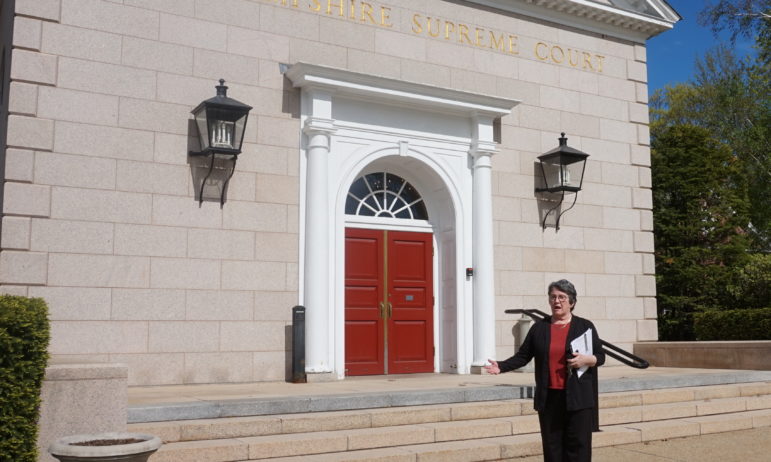
By Joseph P. Nadeau, a retired justice of the New Hampshire Supreme Court, John T. Broderick, Jr., and Linda S. Dalianis both retired as chief justice of the New Hampshire Supreme Court.
Having struggled with budgets during our tenure on the Supreme Court, we understand the difficult choices that must be made in the legislative budgetary process. We believe it is important for the Court, as a separate branch of government, to present a budget that informs the legislature what the Court feels is necessary for the judiciary effectively to meet its constitutional responsibilities.
We applaud Governor Ayotte’s decision to support continued funding of New Hampshire’s highly successful Adult Drug Court program. The early explanation by the Judicial Branch that funding for the program had to be eliminated in order to prevent Judicial Branch staff from being laid off is hard to rationalize.
When a governor orders all state agencies in the Executive Branch to reduce their proposed budgets for the approaching biennium by a certain percentage, the department heads of those agencies must comply, as they all report to the governor. That mandate does not apply to the third branch of government.
During our tenure on the Court, we were always mindful of a governor’s request for agency budget cuts, but we did not treat the Supreme Court as an executive branch agency. It is the head of the third branch of government.
Pursuant to New Hampshire budget writing statutes, the Governor recommends a spending level for the courts but does not have budgetary responsibility for its determination. For decades, Supreme Court chief justices (with consultation of their fellow Justices and the leadership of the trial courts) negotiated budgets directly with legislative leaders based upon the fiscal needs of the trial courts and available revenues, independent of the governor’s agency directives. When the Court’s budget is eventually set, the Court then determines spending priorities.
It is hard to reconcile the Court Communication Director’s reported comment that “treatment court is the branch’s No. 1 prioritized need under the budget process” with the Supreme Court’s decision not to include money for treatment court programs in its first draft of the Judicial Branch budget. Budget proposals are important Court policy documents – they express priorities. A proposed budget that would eliminate funding for Adult Drug Court can only be seen as a statement that this critical program is not a priority for the Judicial Branch
As was pointed out by the trial judges administering the program, when the Legislature fully funded treatment courts in 2016, and in every budget cycle thereafter, the Judicial Branch clearly stated that while funding for treatment courts is contained in the Judicial Branch budget, it is a separate program designed to benefit the communities at large. The program was never intended to provide an extra buffer for the Court to offer in lieu of actual cuts.
It would be reassuring if the justices of the Court were to amend the budget submission to the legislature to include Drug Court funding. Such an amendment would signal to the participants and to the communities who benefit from the program, that the Supreme Court truly does recognize the success and the value of the program.
Joseph P. Nadeau is a retired justice of the New Hampshire Supreme Court, John T. Broderick, Jr., and Linda S. Dalianis both retired as chief justices of the New Hampshire Supreme Court.