By PAULA TRACY, InDepthNH.org
PELHAM – The state’s Youth Development Center claims administrator received approval for an additional $35 million to pay abuse victims Wednesday from the state’s Executive Council and received praise for asking lawyers to take 25 percent rather than 33 percent of the claims from their clients.
Earlier in this budget cycle, $20 million was approved, far short of the $75 million a year many think it is going to take to come to settlements.
Gerard Boyle, a retired circuit court judge, who was chosen by the governor in March to handle the remaining 1,700 claims, said his goal is to complete the work in three years rather than six at the former pace, but the limiting factor will be available money to pay out to individuals.
Boyle said he is now holding hearings in places like the Berlin prison and law offices in Manchester, Dover, Portsmouth and Concord and noted that more than 80 percent of the claimants have had long histories with the courts and the prisons.
Estimates are the state might have to pay out more than $1 billion to those who claim they were sexually and physically abused as incarcerated children by state employees at the former Youth Development Center in Manchester, now called the Sununu Youth Services Center.
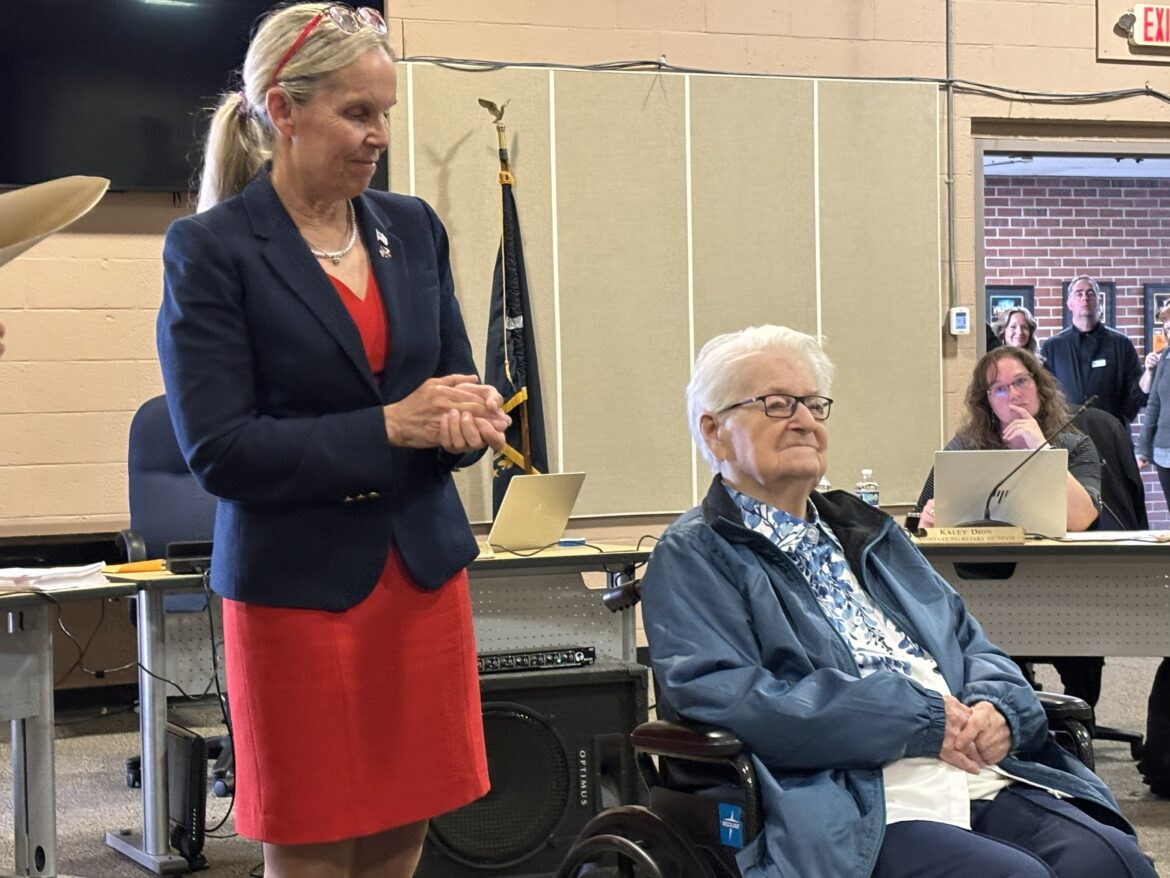
Boyle spoke to the governor and council at its meeting in the Pelham Town Hall Wednesday, the last of a series of “Road Show” meetings across the state this summer and fall. This one was hosted by Executive Councilor Janet Stevens, R-Rye in her district.
Boyle told Republican Gov. Kelly Ayotte and the five-member council that he has received assurances that the $35 million, coming from the state’s general fund, is expected to be approved Friday when the state’s fiscal committee meets. The funds are contingent upon both bodies acting on the request.
Boyle took over the job as administrator from John Broderick, a retired Supreme Court chief justice who said the legislature took his job away and he did not resign. The legislature changed the law as part of the budget trailer bill allowing the governor to make the choice for an administrator instead of being appointed by the courts. It also included a provision that any award or decision by the administrator could be overruled by the Attorney General.
So far, Boyle said, none of his decisions in cases have been overruled by Attorney General John Formella. Boyle noted that the pace of hearings so far has been such that it would take about six years to resolve all cases. He said his goal is now to have it done in three years though it is more likely it will take four.
He recently got some help with the appointment of attorney Jim Steiner joining to hear cases. Steiner is being trained right now.
The pace of six cases a week might soon increase to eight with Steiner’s help, he noted.
Boyle was praised by Executive Councilor John Stephen, R-Manchester, for asking lawyers in the cases to consider dropping their fees to 25 percent.
Stephen said he thought it was terrible that lawyers are getting 33 percent of the settlement amount. Boyle agreed and said that this is not heavy lifting for lawyers compared to lengthy trials which involve significant preparation and cost of expert witnesses.
Boyle said he has completed 53 hearings in the last month and a half and of that, those claimants were seeking $85 million and he approved just under $20 million. That is 23 percent of what the claimants were seeking.
His average award so far has been $375,000 a claim.
“But that will change as we go forward because of some claims, we’ve given one and a half million dollars to, but to others we have given zero. So it depends upon the claimant and the claim and the credibility and the aggravating factors and the mitigating factors,” he said.
“The sooner we can do this the sooner the claimants will have their case resolved and the less money the state will spend on administrative costs,” Boyle said.
In December, he said he anticipates starting a program for mediation and for binding arbitration to see if he can move some of the cases forward faster. “The upside to that is we get more cases done. The downside is, is to find that pot of money that we can pay out the claimants,” and he noted he can’t offer a settlement without the money.
Most cases are being paid out over a period of years. If the award is for $100,000 or less it is paid in a lump sum, he said, and if it is for $500,000 or more it is being paid out over 10 years.
The legislature did not put any money into the claims fund in this current budget but indicated that the administrator could come to them and the council for additional funds when needed. He said the $35 million should get the state through the end of this fiscal year in June.
David Meehan was one YDC victim who did not go the settlement case route. The jury awarded Meehan $38 million though that is now subject to litigation as the court awarded far less.
Legislators created the settlement fund in 2022 to try and keep as many cases out of court as possible.
Since the fund started accepting claims under Broderick the fund settled a total of 386 victim claims for more than $210 million without interest, or more than $221 million with interest.
Some claimants have agreed to be paid over a period of years, necessitating interest. The settlements range from $3,000 on the low end, to $1.5 million. The average settlement amount is $545,000 per victim, with a few settled above the $1.5 million for egregious sexual abuse.
Boyle said Wednesday that last week he settled one case for $1.5 million. The statute allows for attorney’s to get as much as 33 percent. In the case last week, the attorneys received $500,000 “for doing very little work. These are not medical malpractice cases,” he noted.
He said he has been asking lawyers to take 25 percent. “One firm, Chuck Douglas’s firm, came right out front and said ’25 percent. Done.’ Others have not been so amenable to that request.”
Boyle said he initially asked the fiscal committee for $55 million. He said he was before the council asking for $35 million.
“I thought that would get me from where we were last summer up to the end of this current fiscal year. And the fiscal committee came back and said, ‘We understand what you are saying but we don’t have that right now. Let’s take a look at it later on and we will give you $20 million right now,’ which they did last summer.”
Also praising the effort were Executive Councilors Karen Liot Hill, D-Lebanon, and Stevens.
Boyle noted he is having both the attorneys and claimants sign documents that note the amounts the attorney will be paid so that the claimant knows that.
The governor thanked Boyle for his work to date and the council unanimously supported the $35 million request.
CREPEAU, OTHERS NOMINATED
Adam J. Crepeau was nominated as commissioner of the state Department of Natural and Cultural Resources by Gov. Ayotte.
Crepeau, who was deputy commissioner for the Department of Environmental Services, has been serving as interim commissioner since Sarah Stewart resigned from the post at the governor’s request in February.
A communication breakdown in her department – which members, but not Stewart, were notified by the federal government of its now-scuttled plan to build an ICE detention center in Merrimack, led to Stewart’s high profile resignation.
The governor had said she did not know the federal government was considering an ICE facility in the state but a right to know request led to the public knowing that the federal government had sought information from the department.
Crepeau, of Gilford, will serve through May of 2030 if confirmed by the Executive Council.
Jennifer Rhodes of Winchester was nominated to the Juvenile Parole Board and Kimberly Ambrose of Claremont was nominated to the Community College System of New Hampshire as its employee member.
EMPLOYMENT SECURITY READY FOR MEDICAID WORK REQUIREMENT JAN 1 IMPLEMENTATION PLAN
Commissioner for the Department of Employment Security Richard Lavers said it will be ready to process eligibility information for Medicaid work requirements when it goes into effect on January 1, 2027.
A report https://indepthnh.org/2026/10/20/29000-granite-staters-could-lose-their-health-coverage-new-study-says/ said it is estimated that as many as 29,000 could be cut off the rolls, some because they did not submit adequate documentation.
Executive Councilor Karen Liot Hill, D-Lebanon, said she was happy to hear that the state was prepared to work with individuals.
Lavers said the 29,000 number quoted was “unfortunate” and that it is more like 6,300 individuals.
Able bodied individuals will have to document that they are seeking work, studying or have other issues which preclude them from working to get Medicaid for their healthcare.
HONORED
Honored among a number of groups and individuals was Pelham Police Chief Anne Perriello. The governor said she has championed community engagement and supports residents in need and has worked on innovative achievements.
Also, Helen Rogers of Pelham was honored as the oldest citizen of the town. She is 110. She was presented with the town’s Boston Post Cane.
“This is for me?” she asked.
“Women like you paved the way for women like me,” Ayotte said.
LITTLETON COMMUNITY CENTER TO GET $500,000 BLOCK GRANT
The Executive Council approved a Community Development Finance Authority grant request for the Town of Littleton in the amount of $500,000 on behalf of Littleton Community Center to support rehabilitation of the historic Littleton Community Center at 120 Main Street.
The grant through June 30, 2028, is federally funded. The center is a resource that is available to all 6,000 residents of Littleton with a wide range of community programs, educational workshops, and social gatherings designed to promote wellness, learning, and civic engagement.
The project involves the rehabilitation of two historic buildings: the Community House and the Carriage Barn. This grant will be used to address structural and mechanical deficiencies, upgrade interior spaces, and improve functionality so the buildings can continue to support community programming. The total project cost is $2,222,314.
The remaining funds will come from multiple sources including NBRC, private foundations, congressionally directed funds, local capital funds, and organizational reserves.
NEXT MEETING
The council next meets after the election on Tuesday, Nov. 10 at the State House.