Local watchdog group C-10 asks federal regulators to step in, warning that concrete degradation at the Seabrook Nuclear Plant is worsening faster than predicted — with no updated proof that nearby communities remain safe
Amesbury, MA — C-10 Research and Education Foundation, the Seabrook-area citizen group that has monitored the nuclear plant for decades, says it has sent a letter to the five Commissioners of the U.S. Nuclear Regulatory Commission demanding federal intervention over a concrete degradation problem at Seabrook Station.
C-10 shares its concerns that this “concrete cancer” is getting worse faster than the plant’s owner NextEra predicted, and that NextEra’s faulty testing program has not produced evidence that the plant can continue to operate safely.
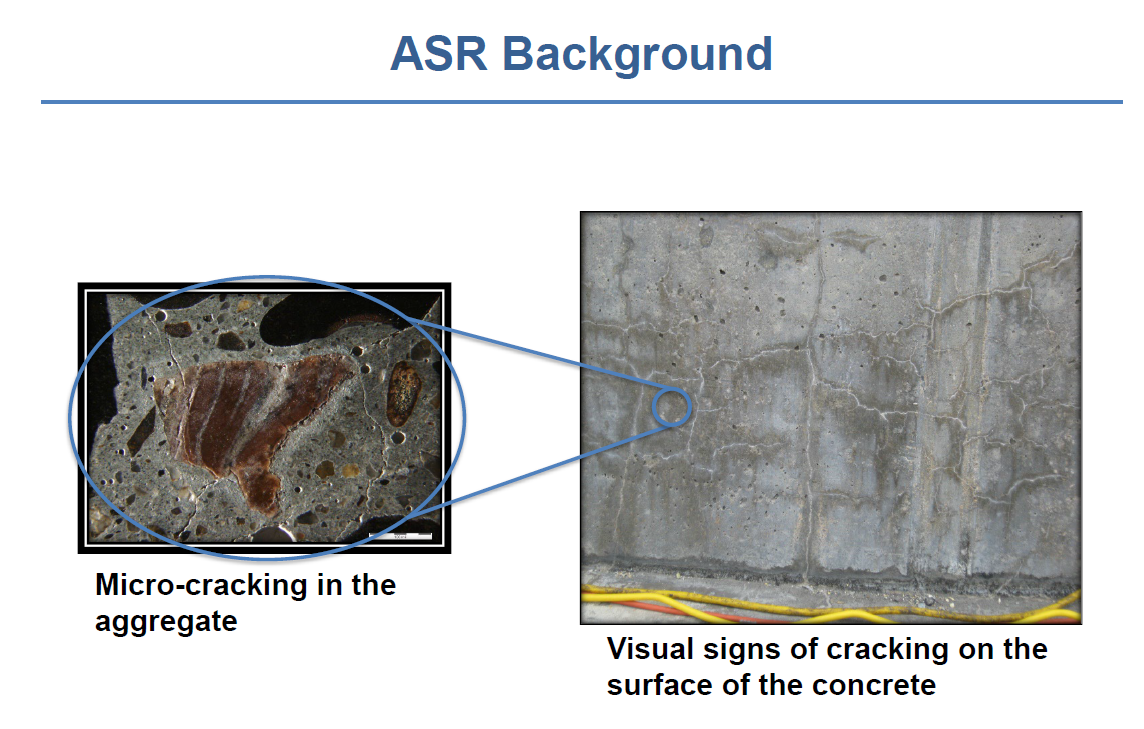
At issue is alkali-silica reaction, or ASR, a chemical process that slowly cracks and weakens concrete. It is affecting safety-related concrete structures at Seabrook, including the containment building that houses the reactor — just a few miles from homes, beaches, and schools along the New Hampshire and Massachusetts seacoast, according to C-10.
New findings show ASR is advancing faster and more extensively at Seabrook than NextEra Seabrook, LLC predicted ten years ago, and is now projected to exceed the safety limit set in the plant’s operating license as early as 2034, well before the operating license expires in 2050, according to C-10.
“What this means for our communities is that the tests NextEra has relied on for a decade to reassure regulators and the public don’t actually tell us if this weakened concrete is safe enough – during earthquakes or every day operation,” said Sarah Abramson, Executive Director of C-10.
The group’s letter is grounded in a Declaration and Technical Assessment by Victor E. Saouma, Ph.D., a structural engineering and preeminent ASR expert who has testified before NRC safety oversight bodies that NextEra’s original testing relied on unrepresentative test specimens—simple beams rather than more representative structures such as shear walls or shear panels.
Further, the flawed tests used the same beams at 28 days of age as the control baseline, instead of comparing them with companion specimens of the same age that had not undergone ASR expansion. The issues identified by Dr. Saouma are not obscure or debatable points of engineering judgment; they concern basic requirements of sound experimental practice. The shortcomings in NextEra’s testing led them to conclusions that understate the true risk of the “concrete cancer” damage spread throughout all of Seabrook Station’s concrete structures, C-10 said.
C-10 says it has learned that NextEra Seabrook now intends to largely repeat those same flawed tests, which it must do because some of its structures may have less than ten years from today before cracks will become so large that they go beyond what current license allows.
NextEra spokesman Lindsay Robertson, said, “Safety is and will always be our highest priority. Our program to monitor and manage alkali-silica reaction (ASR) for the long-term is effective and comprehensive. It was developed by qualified, credentialed national structural engineering experts using known and accepted monitoring methods, and has been approved by the Nuclear Regulatory Commission (NRC).
“C-10’s narrative is false and a misrepresentation of our monitoring and testing program. Our initial large-scale testing program provided us with structural monitoring criteria that confirms our buildings are strong and robust. We are continuing the NRC-approved structural testing program to inform our future monitoring criteria and ensure safe, reliable operation to 2050 and beyond.
“As always, the NRC has full awareness of our monitoring, testing and management plans. As part of its oversight function, the NRC maintains two full-time inspectors onsite at Seabrook who frequently inspect compliance with the ASR monitoring program,” Robertson said.
NextEra and the NRC have indicated that they are poised to use the same problematic experimental design rather than adopt methods that would actually reflect real-world risk to the plant’s safety structures. C-10 is also raising concerns that the NRC’s own technical advisory committee has downplayed the need to apply both newer research from the National Institute of Standards and Technology (NIST) and the existing well-established studies which contradict NextEra’s results.
In 2018, this advisory committee was given an inaccurate summary of the preliminary NIST research results – and that misinformation was shared with the NRC Commissioners as a reason to allow NextEra to proceed with their flawed tests. As of today, the final independent research results are in and quite clearly show that the seacoast community has no reliable, independent confirmation that Seabrook Station’s cracking concrete meets the safety margins its operating license requires.
C-10 is asking the Commissioners to personally step in — something they have not done on this issue before but previously promised to do if it appeared that the NRC staff were not properly attending to this “concrete cancer” issue at Seabrook.
C-10 is cashing in that IOU and asking the Commissioners to require that NextEra use realistic, representative testing before Seabrook’s concrete degradation is allowed to advance beyond the current allowable limits.
C-10’s requests include testing with representative structural specimens, comparing those against undamaged and similarly aged control specimens, independent peer review of any new test program as would be expected in any other credible test of this kind, and an acknowledgement that previous reports given to the Commission in 2018 included misinterpretations of research that once published in 2022 actually revealed opposite conclusions.
“Seabrook is operating without the complete technical basis needed to demonstrate continued structural adequacy of its safety-related concrete structures under design-basis seismic loading.” said Dr. Victor Saouma.
The letter does not seek to reopen C-10’s 2019 legal case which was already adjudicated, in which Dr. Saouma’s testimony resulted in six new license terms requiring better and more frequent monitoring of the ASR-induced cracks and deformation at Seabrook Station. Instead, C-10 says it seeks to build on that proceeding by ensuring the Commission and NRC Staff account for the recent decade’s worth of additional scientific research before NextEra is permitted to move forward with any new testing program.
The letter was sent by C-10’s counsel, Diane Curran, and copied to NextEra Seabrook, LLC; NRC regional and Seabrook-based inspection staff; the Chair of the ACRS; and the congressional delegations of New Hampshire and Massachusetts.
Attached is the complete file submitted to the Secretary of the NRC Commission on October 8, 2026 which contains: the full letter to the Commissioners, followed Dr. Saouma’s credentials, and his Technical Assessment and associated peer reviews. These documents and more can be found at www.c-10.org/concrete-cancer