By AARON DAVIS, InDepthNH.org
A renewed trade war with Canada has Granite Staters reeling again as businesses and customers on both sides of the border scramble to adapt to tariffs and a changing business climate.
For a state that has the greeting “Bienvenue” on its highway signs, welcoming French-speaking tourists to the Granite State, New Hampshire businesses and residents are finding themselves unwilling participants in the trade war.
“Canada isn’t just one of our closest neighbors — it’s one of New Hampshire’s most important trading partners. An escalating trade war between our two countries is bad for New Hampshire businesses, workers, and families,” said District 2 Executive Councilor Karen Liot Hill, D-Lebanon, in an email to InDepthNH.org. “Tariffs are ultimately another cost that gets built into the things we buy.”
Canada is New Hampshire’s largest import partner and second-largest export market, according to data from the Department of Commerce. New Hampshire exported roughly $859.2 million in goods to Canada 2025 and imported about $1.9 billion in goods.
The collapse in trade negotiations that led to the latest salvo of tariffs has brought an additional $20 billion worth of goods on both sides of the border subject to tariffs this week. On Tuesday, Canada released their tariff list with 700 items facing duties of up to 50%. The list extended beyond the usual industrial goods to seafood, cheese, clothing, cosmetics and toilet paper, according to reporting from the Associated Press.
The pinch isn’t just on paper, toilet or otherwise.
For some businesses, heading into another round of a trade war with our neighbors to the north has run up costs over time.
“One of the fallouts from this is if you are buying equipment manufactured in Canada, it is increasing in price,” said Jasen Stock, executive director of the N.H. Timberland Owners Association. “To replace your conveyor belt is a heck of a lot more expensive than it was pre-tariff.”
Loggers already sent a letter to the U.S. Trade Representative in June, seeking relief on tariffs that added up to $100,000 in extra costs on specialized logging equipment that the New England and Lakes Region logging industry relies on and is only built in Finland and Sweden.
For the lumber industry in New Hampshire, the tariffs complicate an already difficult trade environment with the government of Canada.
“There’s a lot of lumber that comes out of Canada and there’s been a long-running trade war on that for decades. These tariffs supercharged that ongoing and running trade dispute,” Stock said.
The dispute has been ongoing since 1982 and has been known as the “grandaddy of all Canadian-U.S. trade disputes” according to the Financial Post, and a framework for resolving the pricing dispute between the two countries was reached in 2006 with the Softwood Lumber Agreement, but that agreement expired in 2015 and saw renewed tariffs in 2017.
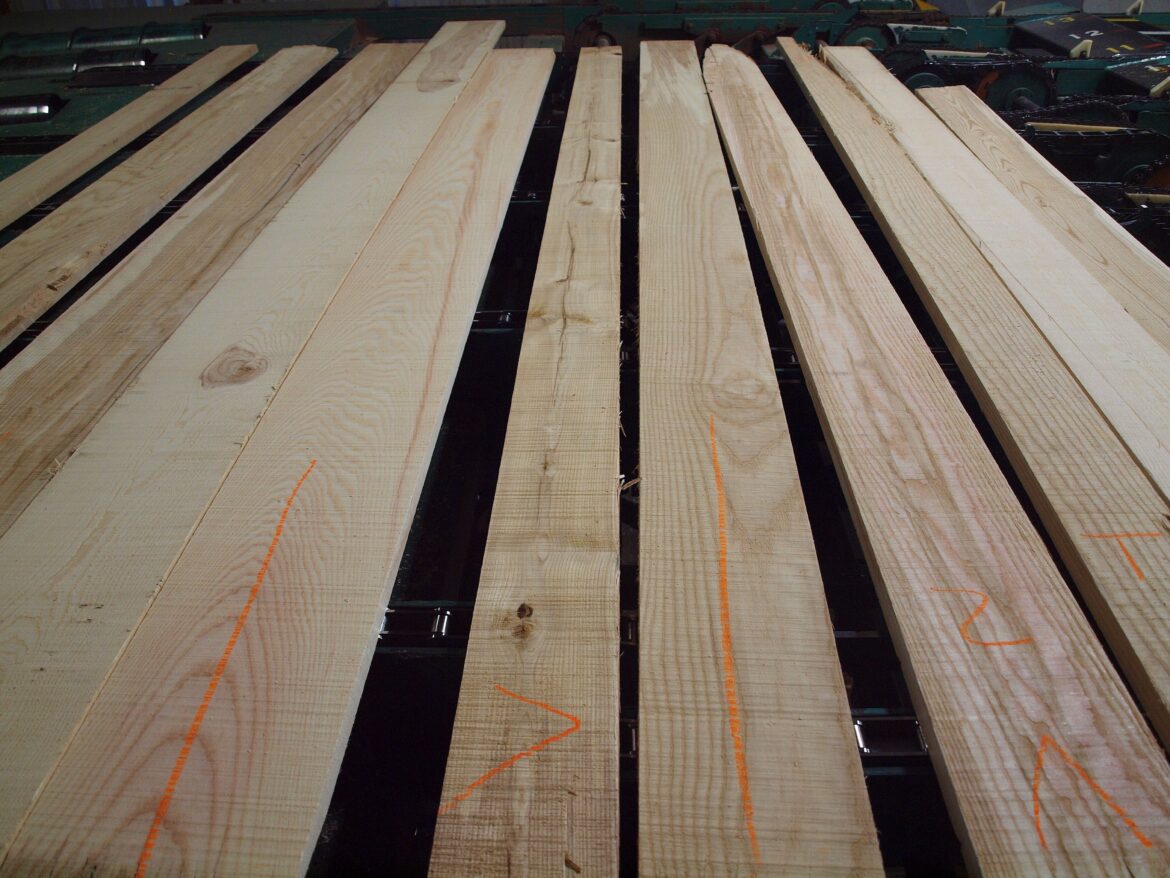
Stock said that the difficulty with the tariffs was exacerbated for products that take longer to get from harvest to market. For lumber, depending on the species, it may take months for the lumber to be harvested, sawed, dried and planed.
“In today’s market you see the time lag. If I’m buying a log today based on today’s market conditions and a tariff comes in, decreasing my competitiveness by 10%, then three months from now, when I got to sell that 2×4, I am selling it under a different economic model than when I bought it,” Stock said. “When the government puts its thumb on the scale of the marketplace, there’s always unintended consequences.”
While the producers of building materials are dealing with the chaos, the building and construction industry planned ahead this round. It isn’t their first rodeo and they were prepared.
“We’ve seen this two times before: the threat of tariffs, then they’re rolled back and come back again. Let’s see how it plays out,” said Matt Mayberry, CEO of New Hampshire Homebuilders Association. “The builders and contractors said ‘let’s get ahead of it this time’ and got some extra in case this comes up again. We’ll always sell the material. It doesn’t have an expiration date on it.”
Mayberry said homebuilders in the state have 60 to 90 days of building materials in stock for this recent round of trade disputes and are ready to weather it this time. For housing, the materials aren’t the bottleneck, it’s a labor shortage.
“We can get all the permissions we wish, but if we want to put nail into wood, it’s not a materials issue as much as a labor issue,” Mayberry explained.
Though it is perennially the hardest hit during trade wars with Canada, even the tourism industry has started to adjust to the uncertainty.
On a typical pre-pandemic year, Canadians made up about 5 percent of overall tourism traffic to Mt. Washington Valley, said Chris Proulx, executive director of the Mt. Washington Valley Chamber of Commerce.
While some of that loss has been backfilled by visitors from Massachusetts and elsewhere in New England, Proulx said that Canadian tourism was a special boon for businesses at the right times, such as Victoria Day weekend, which brings Canadian hikers and outlet shoppers down to Mt. Washington Valley the weekend before Memorial Day in May.
The harder hit may be the emotional toll on the relationships between neighbors.
“We hear from many that they think America isn’t a safe place to visit or who have taken a stand that they won’t visit until this situation is sorted out,” Proulx said. “Mt. Washington Valley is a touchpoint of magic for many people and many came as a kid for the first time to Storyland or Santa’s Village. To think of this imaginary wall being put up, preventing people from going to their happy place…”