By GARRY RAYNO, InDepthNH.org
CONCORD — This session Gov. Kelly Ayotte may have vetoed a modern record number of bills — 33 — passed with her party in control of the legislature, but House and Senate members Wednesday were in a mood to overturn a healthy number — seven — of her vetoes Wednesday.
The House and Senate took up 31 of those vetoes as two had already been sustained by lawmakers earlier this session.
The one bill the governor vetoed that drew immediate pushback was the state’s $4.5 billion 10-Year-Highway-Improvement Plan.
House Bill 2026 included not only the improvement plan but a plan to double turnpike tolls for out-of-state motorists and New Hampshire residents who do not have an E-ZPass transponder to go through the turnpike tolls, but instead pay cash.
Ayotte vetoed the bill saying she did not support toll increases at this time, but the bill had sailed through both the House and Senate at the end of the legislative session in June and had ample support among the state’s construction industry as it addressed two long-time projects that sat on the drawing board for years due to the lack of funds to match federal money.
The additional toll revenues from the increases allowed the Senate to include the $286 million project to widen I-93 from the junction of I-89 north through Concord so it is not a parking lot on Friday and Sundays in the Summer or on Race Weekend which is this weekend.
The Senate was also able to add the exit 6 and 7 expansion project in Manchester for I-293 has also been on the drawing board for some time with its short exit and on ramps on the busy section of highway.
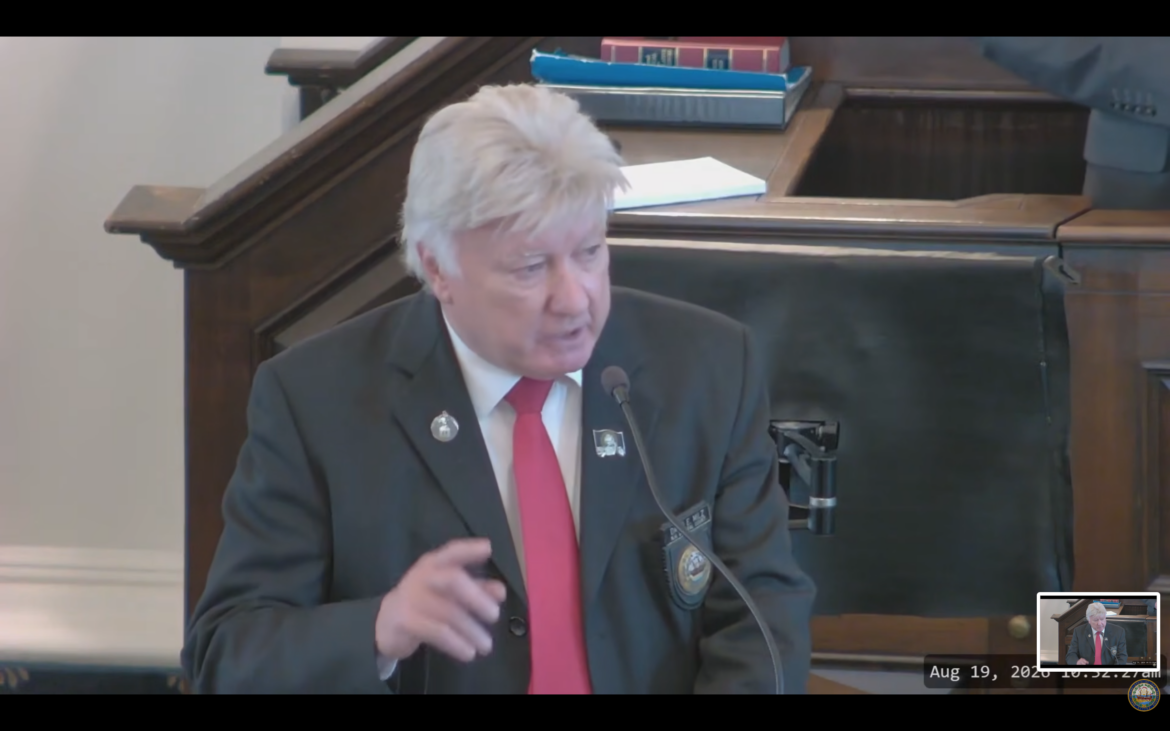
Rep. David Milz, R-Derry, chairman of the House Public Works and Highways Committee, urged lawmakers Wednesday to override her veto, although he blamed Ayotte’s staff for the decision, not the governor.
“Public Works and Highways doesn’t have to come to the well very often and I’m only up here because the governor’s staff has made a very, very bad decision,” he said, urging House members “to put the 10-year plan back on track.”
In the Senate, which passed the override unanimously, Sen. Donovan Fenton, D-Keene said “This proposal is imperative to ensure the safety and longevity of our infrastructure. Our roads and highways and bridges are essential arteries of commerce and the byways of countless tourists who visit our beautiful state. This veto delays major improvements, creates uncertainty for our businesses and workers, and puts federal funding into question. It also puts hundreds of millions of dollars out of reach for our state. . . Vetoing this bill puts the safety of Granite Staters in jeopardy.”
After the override, Ayotte, as she did when she vetoed the bill, called the toll increase a tax, although it is a user fee and doubled down on her opposition. “Make no mistake of it, this is a tax increase on Granite Staters. If you pay cash, you will pay double. If you didn’t get a new transponder when you moved here, you will pay double,” Ayotte said in a statement. “I’ll always use my veto pen when it means stopping tax hikes. Politicians will always want to spend more of your money, but when they double costs, it makes life less affordable and crushes working families.”
The toll increase was included in HB 2026 and passed both the Senate and House as a separate bill, Senate Bill 627.
Ayotte also vetoed that bill, but the Senate sustained the veto unanimously after it had overridden HB 2026.
New Trial
The House and Senate also overrode Ayotte’s veto of House Bill 1422, which would provide an exemption for the state’s three-year limit on requesting a new trial if new evidence is discovered.
The House voted 314-7 to override the veto and the Senate voted 18-6.
In the House Rep. Robert Lynn, R-Windham, urged his colleagues to overturn the veto, saying “We’re not in the business of letting innocent people stay in jail. That is inconsistent with our system.”
He noted only three other states have a similar time limit on new trials as New Hampshire.
In the Senate, Sen. Tara Reardon, D-Concord, said “New Hampshire is the odd one out with a strict 3-year window . . . when we say ‘Live Free or Die’ and ‘liberty and justice for all,’ we should vote consistent with those.”
But Sen. Bill Gannon, R-Sandown, had a differing opinion.
“We’re very much on top of our cases, our judges are on top of them, prosecuting attorneys and we have good defense attorneys in New Hampshire,” he said. “No one in the system will let someone rot in jail if they find they’re innocent. They have a duty to go to the court if there is a factual error. Some people might not trust them as much, but I trust in these people who have given their lives to protect us.”
Ayotte, the state’s former attorney general, said in her veto message she saw no need to provide “a novel approach” to allow another path to a new trial.
Student Support
Ayotte’s veto of House Bill 1267 was also overridden by the House on a 311-6 vote and the Senate voted 24-0.
The bill requires a parent or a guardian to be with a minor student being questioned by an attorney or other non-school person and allows an adult student to request an attorney.
Supporters said the bill ensures parental involvement for their minor child and gives schools clear rules to follow.
The bill allows case workers for the Division for Children, Youth and Family to interview students without their parents’ permission for investigations.
Trespass Orders
The governor’s veto of House Bill 1184 was also overridden by lawmakers Wednesday.
The bill sets out a procedure for school districts and municipalities to follow when they issue no trespass orders such as ones issued to several Bow parents who were protesting a transgender student’s participation in a sporting event last year.
Rep. Diane Pauer, R-Brookline, said now there is no standard and schools and municipalities can issue no trespass orders for any reason, for any length of time and with no recourse to challenge them.
“It’s the wild west out there,” she said.
The House overrode Ayotte’s veto on a 290-29 vote and the Senate voted 24-0.
Warrant Posting
Cities, towns and school districts will no longer be required to post warrant articles in the newspapers of record for town or annual meetings after lawmakers overrode Ayotte’s veto of House Bill 1369.
The bill allows towns and school districts to post the warrant at the site of the meeting, on the district’s or city’s or town’s website or in the local newspaper.
The House voted 305-12 to override the veto and the Senate voted 24-0.
Supporters said the law has been in place since the 1940s and since that time many newspapers have closed and there are better ways to inform the public about an upcoming meeting.
Research and State Parks
The governor vetoed House Bill 1102 because it reduced the fees to state parks for state residents to no more than 50 percent of what is charged out-of-state visitors.
The bill also allows the division of parks to charge varying fees for state residents for certain park usages such as camping, facility rental, parking, or boat rental that is no more than 90 percent of what is charged out-of-state visitors.
The House overrode Ayotte’s veto on a 231-88 vote and the Senate voted 24-0.
The bill also increases the amount of tax credit a company may claim for research and development expenses.
“This bill is about investing in New Hampshire’s future – strengthening our research and development tax credit encourages innovation and investment,” Said Sen. Tim Lang, R-Sanbornton. “These factors will drive job creation and bolster our economy.”
Pot Cultivation
The House and Senate decided Ayotte should not have the last word on whether alternative treatment centers that distribute medical marijuana to patients can have their own growing locations in the state.
Supporters said Senate Bill 468, which allows the centers, would impact energy costs and hopefully lower the price for patients. Rep. Wayne MacDonald, R-Londonderry, said the bill would have the Department of Health and Human Services develop rules and guidelines for the growing facilities and require annual reports on energy usage and prices for patients.
The Senate voted 16-8 to override Ayotte’s veto, while the House voted 257-44.
Nancy West and Aaron Davis contributed to this report.
Garry Rayno may be reached at garry.rayno@yahoo.com.