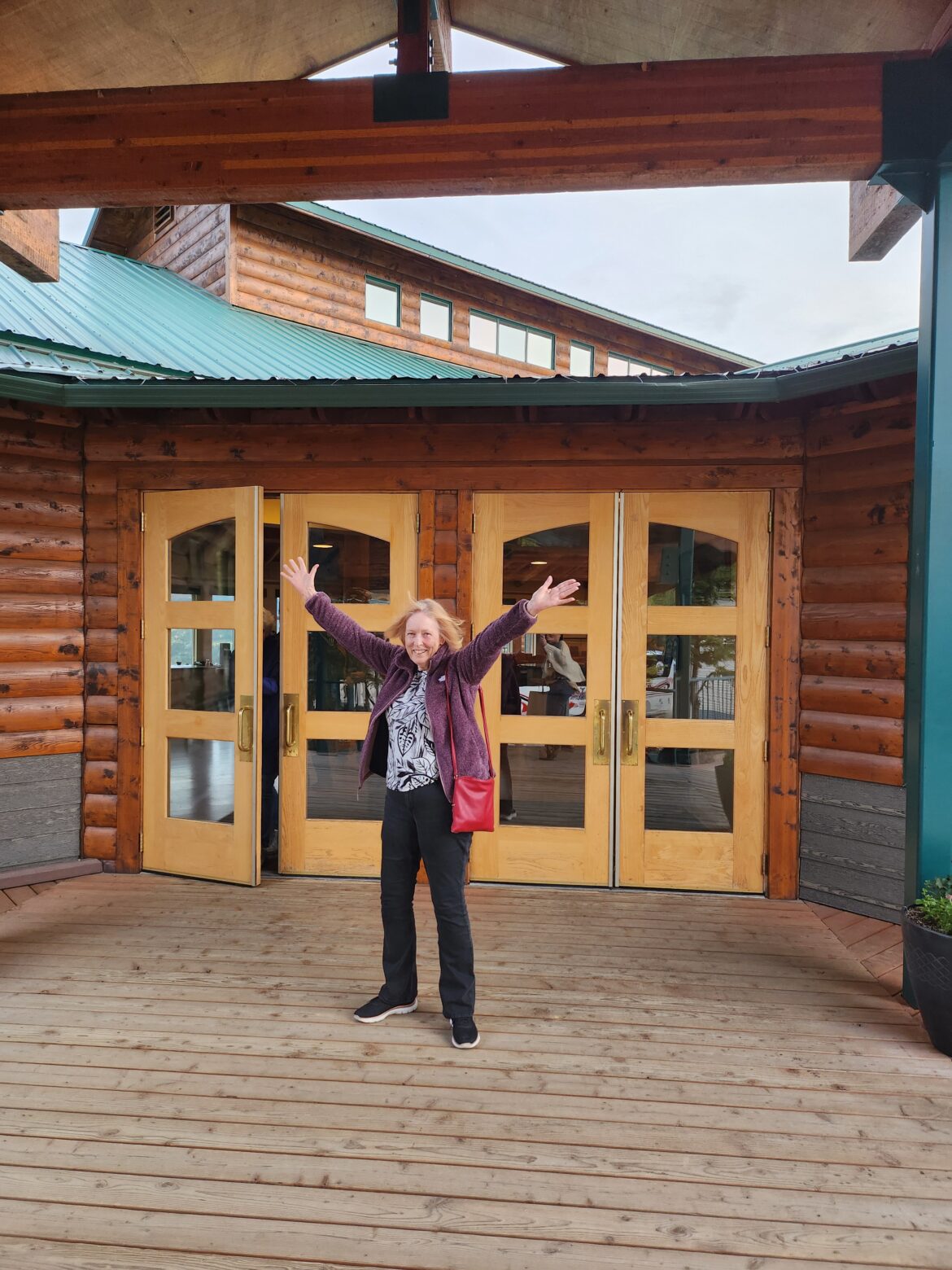
Welcome to The Feral Elder by Valerie Hershfield. Our purpose is to share experiences and thoughts from folks considered “older.” We wouldn’t think of designating what that age is. We hope this column makes you smile, ponder, or just slap your head and say, “Hey, that happened to me!” And, just maybe, share your own thoughts and experiences. My email is feralelder.indepthnh@gmail.com
Who is Valerie Hershfield?
A native Californian, I’ve lived in eight states in my 80 years, but the busiest were the 11 years in New Hampshire where I loved putting my journalism degree to work as a correspondent for the New Hampshire Union Leader. A correspondent covers every kind of news in his or her beat towns. I called it my “murder, mayhem and garden parties” job. At the same time, I juggled being an international tour director, a bartender, a stringer (case finder) for Judge Judy, and a volunteer EMT. I currently live in rural northeast Iowa with two cats and am a part-time docent for a local museum and an ESOL (English for Speakers of Another Language) teacher. Let’s share the ride.
By VALERIE HERSHFIELD, The Feral Elder
There’s a strange thing that often happens as we get older. We either become invisible, or are underestimated as to our knowledge, humor and awareness of the world around us.
I first noticed attitudes toward older people with my parents. They were in their 40s — two generations older than I – when I was born. So, I was aware early in my life how people reacted to them in their senior years.
I was lucky. Both of my parents had good senses of humor, and like me, would throw pride to the wind if they could make someone smile, or better, laugh out loud.
My father was friendly and sharp. He talked to everyone. I vividly recall being in the grocery store checkout line with him when he was about 85. Dad made a funny remark about a headline on a National Enquirer cover perched next to the conveyer belt. Dad laughed. I laughed. The woman behind us in line laughed. The deadpan blinking that took place on the face of the young cashier, clearly not expecting anything, let alone humor from an “old man,” displayed a non-verbalized “Huuuuuh?” Fortunately, a lack of audience approval never stopped Dad from sharing his amusing thoughts.
My mother was funny, too, but she saved her antics for friends and neighbors. I once worked for a community theater. Between performances I took an adult-sized dog suit (complete with large brown floppy ears) home for safekeeping. One Sunday morning my mother donned the suit to water the front lawn. She reported the teenager who lived next door ambled past her, glanced quickly, kept his head down, said nothing, and slunk into his house. Kudos to Bob, the neighbor across the street, who simply waved and cheerfully yelled, “Good morning, Grace.”
Until recently, I’d worked fairly consistently with people close to my age and wasn’t exposed to that attitude. Now that I’m spending more time around people of different ages, I see that underestimation more frequently.
I recently mentioned a humorous TikTok posting to my teenage colleague at the museum where I work. “You know about TikTok!?” She was shocked. “Wow, and you’re, um, you know, well …”
I’m also a volunteer with an English for Speakers of Other Languages (ESOL) group in our town. I mentioned to one of the students, who is about 30, that I couldn’t come to a meeting one morning because I was working. “Quizzical” is the only word for his expression. Finally, “You still work?” in a tone of amazement – and in perfect English.
My daughter accompanied me to a recent neurologist consultation about my ongoing back problem. She and I were sitting side-by-side in his office. I was even physically closer to him. He directed the entire conversation to her. Obviously, I could hear it all, so I didn’t say anything. By the time we left, not only did my back hurt, so did my pride. Next time …
This invisibility also applies to people with disabilities.
I have a friend who uses a a wheelchair. She’s bright and fun and navigates just fine on her own. She says it’s frustrating when her husband or a friend is walking along with her when people address only her companion, even when conversations are pertinent to her.
Once, I was on a bus in San Francisco, sitting next to a blind woman with whom I’d struck up a conversation. We were in the forward seats near the driver. The driver looked at me and asked, “Does she want to get off at the next stop.” The woman, having experienced this behavior too many times, snapped, “I’m blind, not deaf.” I’m tempted to cast politeness aside the next time I’m ignored with, “I’m old, not stupid!”
I’m making peace with this dismissive phenomenon. These moments say more about other people’s assumptions than they say about me. But when someone like my mom’s neighbor Bob comes along and laughs with me, I remember I was never really invisible.