By PAULA TRACY, InDepthNH.org
LEBANON – The Doorway will not shut in the Upper Valley and Sullivan County after an important health care contract to support those reaching out for help fighting substance abuse finally passed the Executive Council Wednesday.
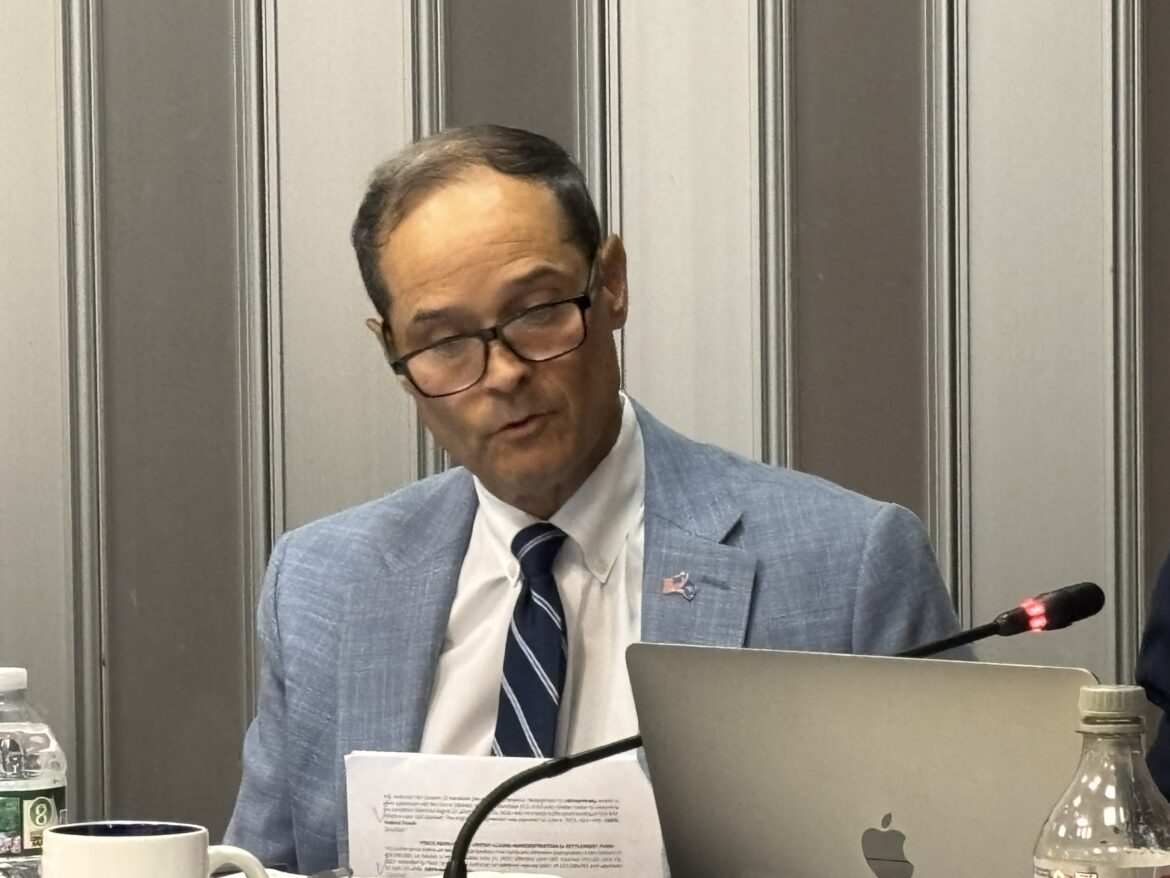
Executive Councilor John Stephen, R-Manchester, who was the state’s Health and Human Services Commissioner from 2003-2007, got the department to go back to renegotiate the sole source contract with Mary Hitchcock Memorial Hospital in Lebanon.
He charged that indirect costs of 35 percent were too high and the new contract now has those costs at 15 percent.
This will allow for those facing substance abuse to get help in this rural Southwest corner of the state.
Gov. Kelly Ayotte withdrew the tabled item and allowed for the submittal of the new proposal which was met with unanimous support at a meeting Wednesday at the Manchester Historic Association Millyard Museum.
Executive Councilor Joe Kenney, R-Wakefield praised Stephen for his efforts to table and hold back on approval. He said that it shows that the council is not some sort of rubber stamp for contractors and that they will be scrutinized.
Executive Councilor Karen Liot Hill, D-Lebanon, whose district includes the Upper Valley, also gave Stephen a pat on the back.
She said she was very concerned that the contract was being held up at the table and noted there were no alternatives for those seeking help if the contract amendment was not passed.
The contract is funded with mostly federal funds, in fact, 92.26 percent with the other funds coming from the state general fund.
It adds $7.1 million and extends the completion date from September, 2026 to Sept. 29, 2027. The total contract is for $14.7 million.
“I do support the Doorway concept,” said Stephen. “This is an important contract,” he said.
He also praised Health and Human Services officials for going back and renegotiating indirect costs, more in line with what other hospitals are getting for their Doorways across the state.
He asked if in the future Doorway contracts were all structured in a similar way because he said all of them are very different.
“I just believe that when you look at all the indirect costs in the budget items…the 35 percent indirect cost line item stood out,” Stephen said.
He said he appreciated the fact that Health and Human Services went back and got a renegotiated rate.
“They have taken that initial 15 percent indirect and put it back into the budget but there were no, am I correct to believe, there were no cut reductions in the indirect to the extent that the…$250,000 cut reduced, indirect, would lead to more services, which I wanted.”
Katja Fox, director of the DHHS Division of Behavioral Health, said what happened after his concerns were discussed at a previous council meeting, the state went back to Dartmouth, there were references to other Doorway contracts, including that at Elliot Hospital in Manchester.
“In looking at how that cost allocation happens, they are able to apply – as we know – the federal funds, the indirect negotiated rate that they have with the feds.
“Instead what they did is they went back to the budget they looked at Elliot’s budget, they looked at other Doorways budgets and the cost allocated in very similar ways so that provider insurance, occupancy and finance staff have to specifically be allocated to the Doorway program and they have to demonstrate that when they submit their the invoices to us,” Fox said.
“So we could quibble about it, but the occupancy is a huge part of the Doorway program. We need a place where people are able to walk in and have those services delivered. So, I would say that they are going into services. It’s just a more precise way to account for the cost of running those three different Doorways.”
Stephen responded. “So the answer of it going into direct services, to those that needed it in the community, which is what I was hoping Dartmouth would come back with, is not the case,” Stephen said. “But, the occupancy. I get that. And then I went back at all the other contracts we approved and it is all over the place,” he said of the different things that are itemized as indirect costs, including insurance as an item.
“The whole thing is out of whack,” he said of Doorway project contracts. “I’m sorry to say that. But, can someone in the department assure me that in the future, when we look at these Doorway contracts there are going to be some standards here?” he asked. “What is making up the indirect, what is making up the direct…and look closely at those services” so that he said he could feel the costs are justified when he votes.
Fox said cost structures of hospital systems across the state are very different with huge variations.
“But I think our finance team does an amazing job in scrutinizing, and that is why they serve on the team, and why we so closely and carefully look at the invoices when they come in,” she said.
Fox said she would leave it to the commissioner to decide if standardization across all Doorways could work.
“Just general scrutiny,” Stephen said. “Fiscally, this is a lot of money.”
Councilor Liot Hill said this contract is for a lot of rural folks in her district “who are struggling” with substance abuse.
She noted that it was Stephen who said at a recent meeting the program can mean “the difference between recovery and relapse.”
She gave the team and Stephen praise.
“I do think that the council’s job of exercising oversight has come into play, and has been effective here. Counselor Stephen raised a question about indirect costs. Great. And Dartmouth went back and revised the way they were calculating their rates….There is no Doorway unless there is a door to go through. And right now, that is at risk.”
She asked Fox what the impact would be if the contract was not approved or continued to sit on the table?
“There would be a huge drop in services,” between now and Sept. 29, the behavioral health director said.
“The whole idea of the doorway program is to have 24/7 access through various means and they were chosen because of their operations. Ee would have to find a qualified vendor…I think that would be extremely difficult,” Fox said.
The unanimous vote to approve the contract followed.
Health & Mental Health
Renegotiated Doorway Contract for Upper Valley, Sullivan County Passes Council Muster After Scrutiny
|
Paula Tracy photo
Executive Councilor John Stephen is pictured at the Executive Council meeting he hosted Wednesday at the Manchester Historic Association Millyard Museum.