By PAULA TRACY, InDepthNH.org
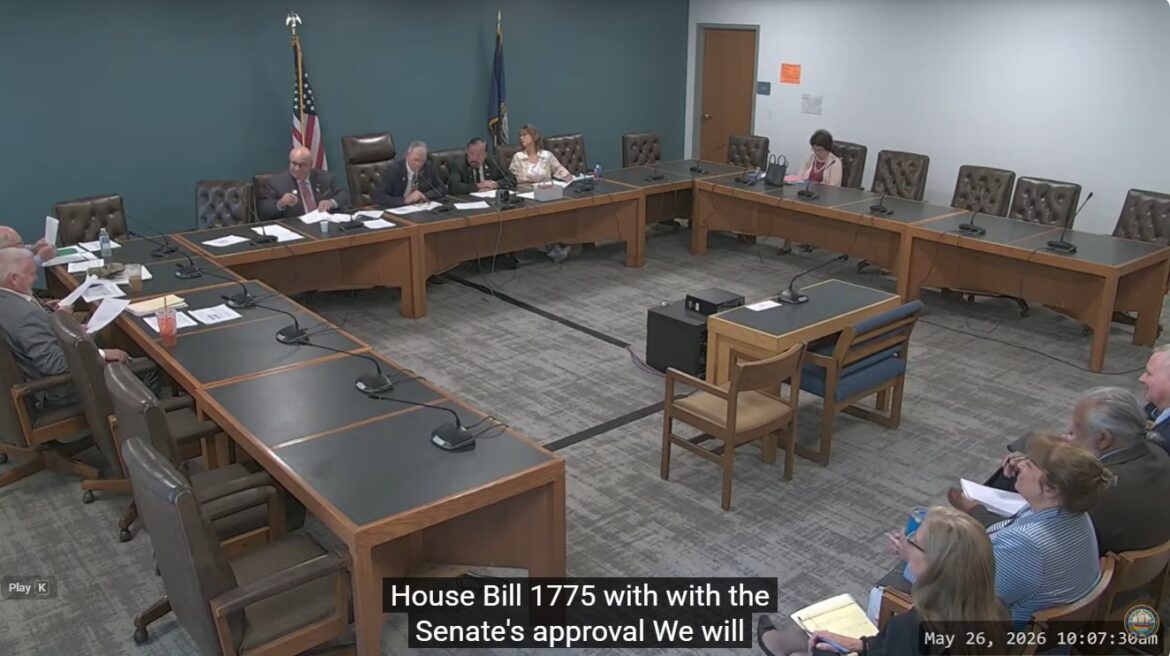
CONCORD – Representatives of both the House and Senate have agreed to pass an amended version of House Bill 1775 allowing utilities to have an ownership interest in up to 10 percent of a natural gas or nuclear power generation facility.
The Senate had previously amended the bill by a voice vote to allow up to 20 percent ownership interest.
“We knew what we were doing,” said state Sen. David Watters, D-Dover, in a brief committee of conference on Tuesday morning. “But we are willing to go along with you,” and allow for 10 percent.
The House had passed the measure by a vote of 191-149 but did not concur with the Senate version, which passed on a voice vote in the upper chamber on May 15.
State Rep. Michael Vose, R-Epping, who chaired the committee of conference, said the House wanted a change in language from the use of “section” to “chapter,” which reverted to the bill’s original intent.
Vose called the change in the Senate “inadvertent,” but Sen. Watters disagreed with that contention, noting that the Senate knew what it was doing with that change.
The matter is now headed to the House and is on the consent calendar.
The bill reads that “distributed energy resources can increase overall energy efficiency and provide energy security and diversity by eliminating, displacing, or better managing traditional fossil fuel energy deliveries from the centralized bulk power grid, in keeping with the objectives of RSA 362-F:1. It is therefore in the public interest to stimulate investment in distributed energy resources in New Hampshire in diverse ways, including by encouraging New Hampshire electric public utilities to invest in renewable and clean distributed energy resources at the lowest reasonable cost to taxpayers benefiting the transmission and distribution system under state regulatory oversight.
“Reliable, dispatchable, and controllable power generation must also be available to provide all essential electric service when renewable distributed energy resources, including storage, are not sufficient. It is therefore in the public interest to stimulate investment in natural gas, hydrogen, and nuclear technologies, including battery storage, to ensure reliable and efficient energy in addition to renewable and clean distributed energy resources. Given the ability of nuclear technology to provide reactive power, it also ensures grid stability and supports voltage regulation.”
It states “an electric public utility may be eligible to seek rate recovery for its portion of investments in [distributed] natural gas and nuclear energy resources, in addition to renewable distributed energy resources, from the commission by making an appropriate rate filing.”
Prior to that, the commission “shall determine that the utility’s investment and its recovery in rates, as proposed, are in the public interest.”
The bill repeals certain limitations on utility-funded generation equipment and prior investment restrictions.