By GARRY RAYNO, InDepthNH.org
CONCORD — The battle of public school open enrollment continues in the final days of the 2026 legislative session.
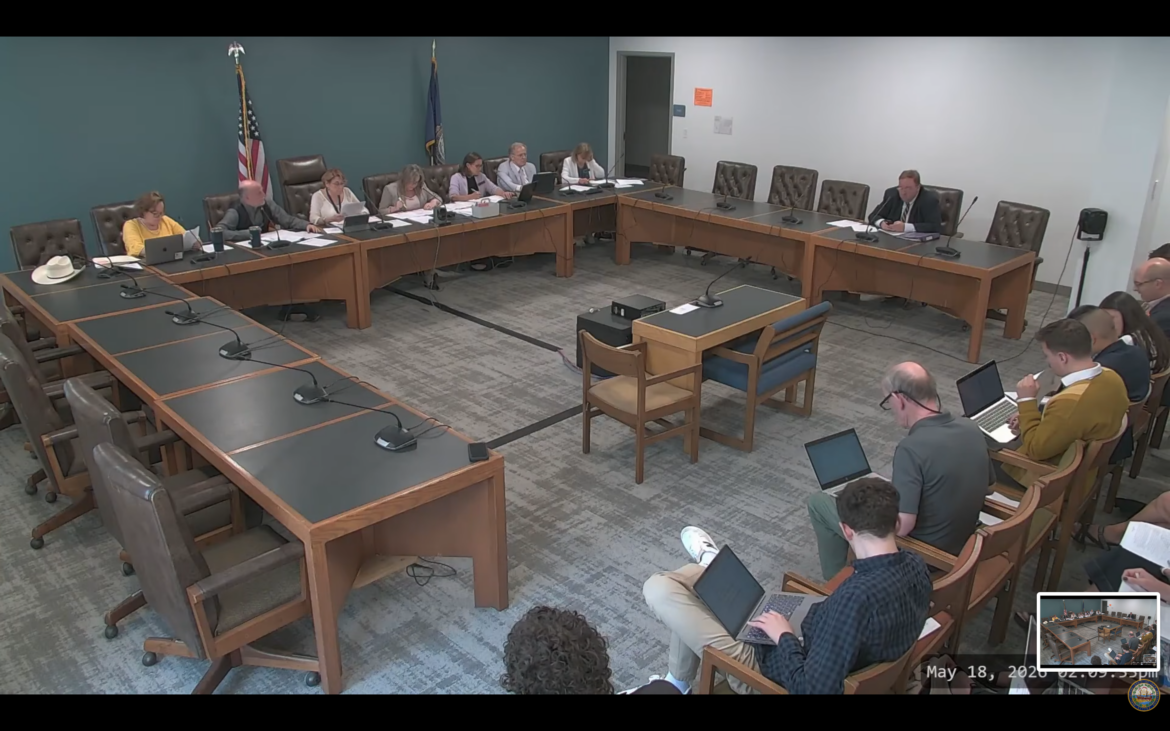
Monday a conference committee on House Bill 751 discussed a proposed amendment to the bill that would cap the program at 500 new students for the first year and then would increase the cap 25 percent if the number of enrolled students approaches 90 percent of the cap.
If that sounds familiar, it is similar to the 10,000 student cap for the Education Freedom Account program this year that will expand to 12,500 students next school year after 10,510 students received grants this school year.
The proposed open enrollment amendment also keeps in the place the funding system adopted for Senate Bill 101, which the House defeated on a 184-168 vote last month.
The receiving school would receive the new student’s state adequacy aid, the differential aid for special education, low-income and English learning students as well as a $5,200 grant from the state, which could total $15,070, but more likely would average about $12,500.
The school sending the student would lose the adequacy and differential aid and the additional money would also be drawn from the Education Trust Fund which provides state aid to public schools including charter schools and also funds the EFA program which this year is projected to cost $52 million.
The funding for the open enrollment program would cost the state a projected $2.8 million the first year and $3.4 million the second year.
The Senate originally passed HB 751 on its first session day this year with a plan to have the House quickly concur with the bill which also includes provisions to allow videotaping, photographing of school events and activities which was legally questionable under a parental rights bill passed last session.
That would have sent the bill to the governor before school district meetings this spring when voters had to decide how many students they could accept under the current open enrollment law and how many of their students could participate in the open enrollment program, with many not allowing their students to participate.
Under the bill, the decisions would be grandfathered for the capacity those districts set for their schools, but prohibiting students from leaving districts would no longer be binding when the new system goes into effect July 1, 2027.
The bill also allows students in open enrollment to continue in their chosen school although their district voted that none of their students could participate in the program.
Rep. Peggy Balboni, D-Rye, noted there are a number of open enrolled students in one school district which is receiving $17,000 per student. Is the sending district going to have to continue paying that as long as those students are in the receiving district, she asked.
Rep. Kristin Noble, R-Bedford, said under the bill the arrangement would be repealed July 1, 2027, so the resident districts would only have to pay for one more year before the state pays.
The conference committee, which consists of three Senators and four House members, went through the proposed changes to the open enrollment plan with the two Democrats expressing concerns ranging from special education to transportation to who will determine where the 500 open enrollment slots will be to existing tuition agreements districts currently have in place that could be impacted by the change.
As it has been since the beginning, special education students and how they are handled under the proposal have caused concerns.
Under the bill, the sending district or resident district is responsible for the special education costs if the student switches to another school which will provide the services to meet the students Individualized Education Plan and bill the other district.
State and federal aid for special education goes to the student’s resident district, but state and federal aid do not cover the cost of most special education services and local property taxpayers pay the bulk of the tab.
Balboni said her town has a tuition agreement with Portsmouth for its students in grades seven through 12 that includes special education.
If a special education student now wants to attend the Winnacunnet High School in Hampton, Rye would be on the hook for those additional costs.
Are communities like Rye now facing multiple tuition agreements with Winnacunnet and Exeter school districts under open enrollment, Balboni asked.
Mark Manganiello, Finance Bureau Administrator for the Department of Education, said some districts have multiple tuition agreements with other districts.
Sen. Suzanne Prentiss, D-Lebanon, asked if the state special education aid stays with the district and doesn’t follow the students under the plan, and was told it did.
She noted it would be up to the two districts how the dollars are exchanged, but the liability lies with the resident district.
Balboni wondered who sets the rates for the services provided. The receiving school district could hire someone whose services are not equal to what the child received and the rate may be more or less expensive than the resident district paid, or she asked, are plans more equalized.
Manganiello said there is no state rate setting for services.
Another issue was who was to decide where the slots would be and how schools determined who would be accepted.
The bill prohibits schools from accepting or rejecting students based on pupil needs, special education needs, disabilities, aptitude, or athletic achievement.
While special education services are the responsibility of the resident districts, 504 plans, which outline accommodations to help students with disabilities who do not need specialized instructions, are the responsibility of the receiving district.
The section was changed to indicate those areas are to be considered when a district is deciding whether to accept an applicant but should not be a determining factor.
Noble said those factors do not allow a district to deny an application, but does note they need to take those areas into consideration.
But Prentiss said a student may have discipline issues or absenteeism because of the problems he or she is having at their current school.
“We don’t want open enrollment cherry picking and choosing who goes where,” she said.
Other concerns about the amendment included a section that indicated once a student is accepted he or she could continue in the new district until graduation or expulsion.
Does that student get to continue even if a district has a large influx of new students register over the summer even if it means adding another teacher, Balboni asked.
Sen. Timothy Lang, R-Sanborton, who is the prime sponsor of the Senate’s open enrollment bill, SB 101, said the section is meant to say the student will continue with his cohort as long he or she attends the school.
He said school boards set the capacity for classes and programs, and most would not set the capacity at 100 percent and instead would leave a little room because they know every September is like shooting darts trying to determine the number of students.
Other concerns were how with the 500 student cap, which excludes the 30 or so students currently under the open enrollment law and intra-district transfers, who would decide where those 500 open slots should be.
Will the state decide, Balboni asked, and Lang and Noble said the department would try to line the openings up with the applications and spread them out geographically around the state.
“We don’t want Portsmouth having all 500 and we don’t want Nashua having 500,” Lang said.
Prentiss said she is concerned “we are pitting school district’s against each other,” and wondered if they might be setting themselves up for legal risks.
Manganiello said there will be some competition and there could be pockets with a lot of students changing schools that could impact tuition agreements and behavior, but he could not foresee any legal risks.
Under the bill the state school board is to appoint committees to develop rules for the new system to be followed statewide.
Several committee members said they hope the new rules will be adopted by the time the program begins with the 2027-2028 school year.
The committee did not set a time to meet again, and left that to the chair to decide.
Next week is expected to be busy with conference committees on numerous bills as lawmakers try to resolve their differences on pieces of legislation before the June 4 deadline to act on conference committee reports.
Garry Rayno may be reached at garry.rayno@yahoo.com.