By GARRY RAYNO, InDepthNH.org
CONCORD — The House Thursday failed to approve a proposed constitutional amendment that would prohibit an income tax in the state.
The proposal, which is bound to be fodder for the upcoming state election, is similar to other plans as recently as 2021 but has never been approved for placement on a general election ballot.
CACR 12 was originally proposed about a month ago, and then reappeared as the subject of a public hearing before coming back to the House for action.
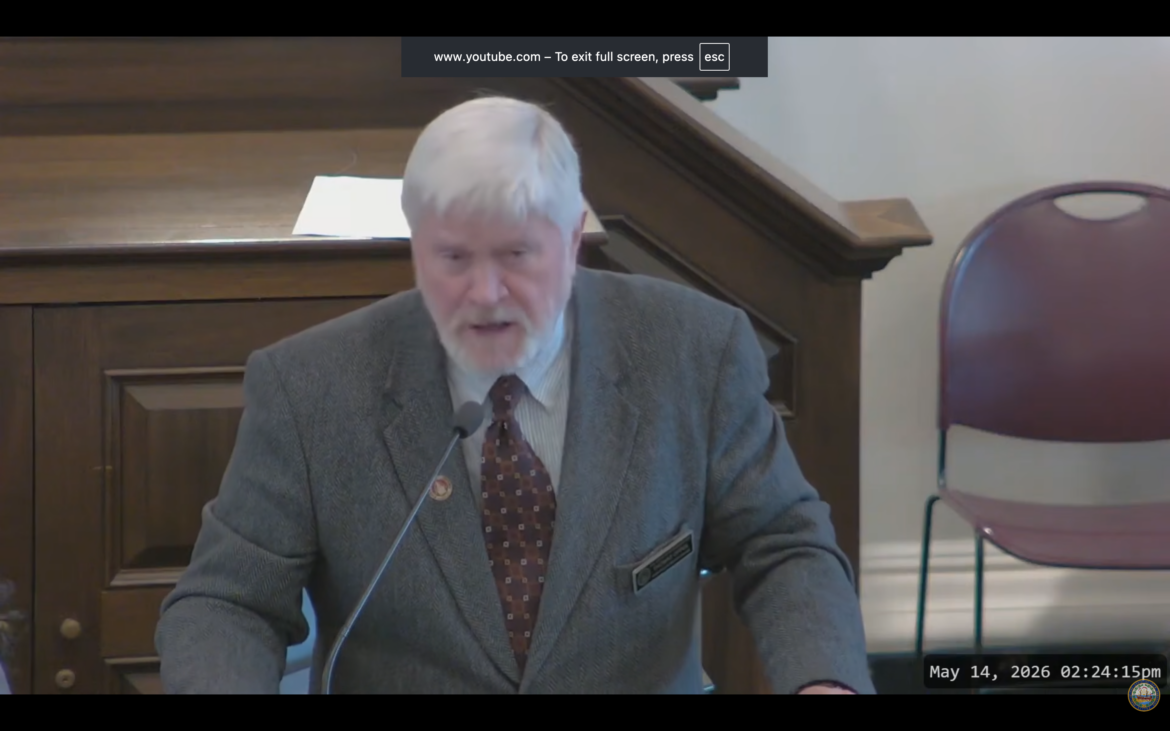
Rep. Dennis Malloy, D-Greenland, said the state has never had a constitutional amendment requiring lawmakers to produce a balanced budget, but they have done so for over 200 years.
In those 200 years, those budgets have never included an income tax as a source of revenue, he noted.
“We’ve done for over 200 years without an income tax in this very room because we listen to the voters,” Malloy said. “Some of the decisions we have made the last few years have benefited the wealthy and large corporations and shifted the burden to property taxpayers.”
Granite Staters do not want an income tax, he said, but do they want to ban an income tax in the constitution, he asked, noting most of the people turning out for the public hearing were lawmakers while the vast majority signing in electronically opposed it.
“Why push for this now is a great question,” he said, noting that of the 24 proposed changes to the constitution only one has passed and that is to eliminate the position of registrar of probate.
“This does nothing to reduce property taxes,” Malloy, “and the high costs of essentials like housing, food and health care.”
But Rep. Jordan Ulery, R-Hudson, noted 80 percent of the people in the state oppose an income tax, yet just this year there have been serious proposals for an income tax put forth.
The constitution gives people the ultimate power to determine how they are taxed, Ulery said, they are the ones who should debate the issue.
“They get to make the laws,” he said and determine the burdens placed on them.
Denying them the right to vote on the issue is political posturing, he said.
Rep. Thomas Oppel, D-Canaan, proposed an amendment that would allow a progressive income tax some time in the future that would have higher rates for those earning more than a lower rate for those earning less.
He noted article 12 requires all citizens to pay their share of the cost of their protection, while it also calls for a flat tax where the rate has to be the same on everyone.
“This amendment does not impose an income tax, it would allow in the future the adoption of a progressive income tax,” Oppel said, “so those with more would pay more as opposed to the current system that levies the heaviest burden on the ones with the least.”
Under the bill the revenue from an income tax would be used only for public education to remedy the three decades of court decisions that the state has failed to support public schools, he said.
The amendment would stipulate the increase in public education support from the income tax would correspond to the reduction in property taxes.
The current tax system imposes the greatest burden on the ones with the least resources, he said, while “the wealthy and well-connected are the only beneficiaries of the so-called New Hampshire advantage.”
Rep. Joe Sweeney, R-Salem, said the proposal would swing the door wide open to taxation on income and wages, while the income tax amendment would slam the door shut.
“This is not New Hampshire,” he said. “This is somewhere else.”
Oppel’s amendment failed on a 322-17 vote before the amendment failed to reach the needed three-fifths majority for a constitutional amendment on a 193-148 vote.
After the vote, House Minority Leader Alexis Simpson, D-Exeter, said “Granite Staters don’t support an income tax. Period. This is all a stunt to distract from a decade of disastrous Republican policies. Property taxes are skyrocketing because Republicans cut corporate taxes by a billion dollars and refuse to fairly fund public schools.
“If Republicans put a fraction of the energy into housing and healthcare as they put into talking about an income tax, we’d be in great shape as a state.”
After the original Claremont education decision the House and Senate each passed their own income tax plans but failed to reconcile the two versions after then governor Jeanne Shaheen said she would veto any income tax proposal that came to her desk.
Garry Rayno may be reached at garry.rayno@yahoo.com.