By PAULA TRACY, InDepthNH.org
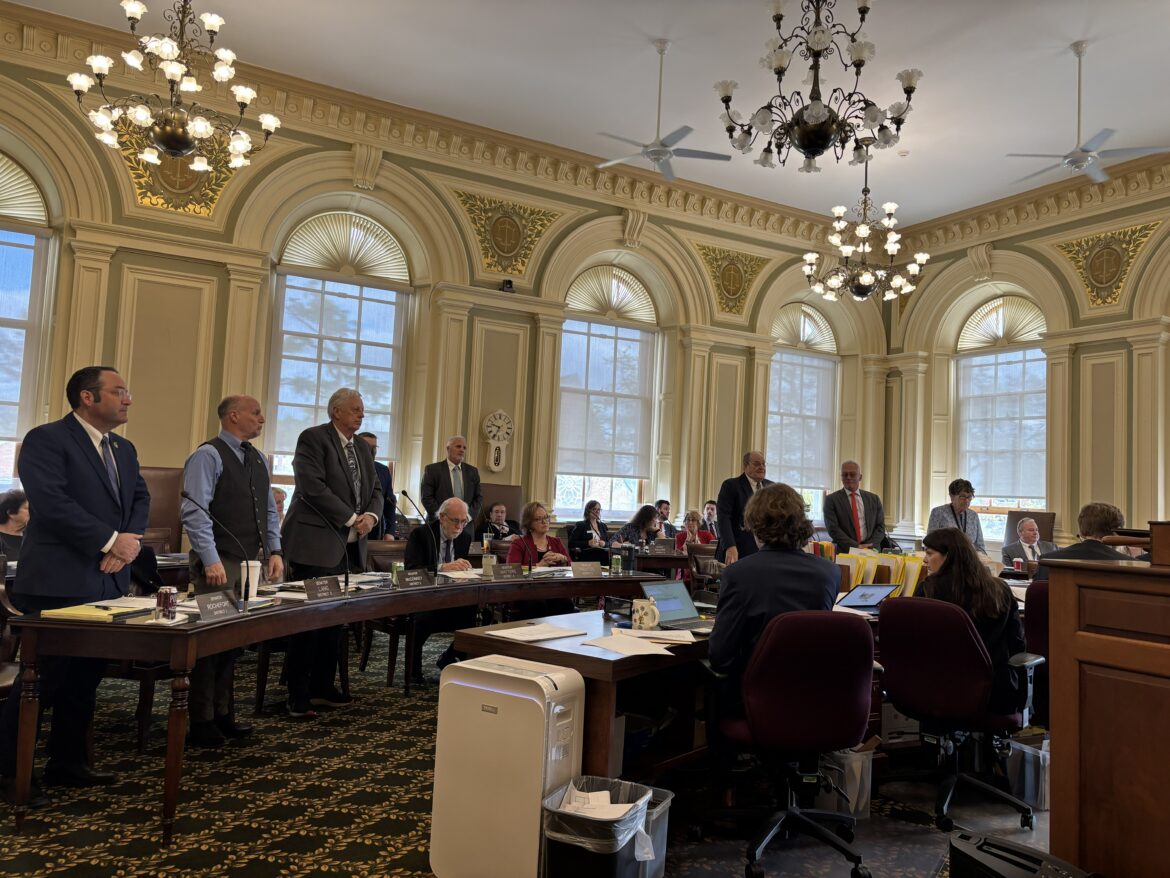
CONCORD – A bill which would have repealed the state law requiring employers pay employees at least two hours of work if they are called in and then were released for the day failed in the state Senate Thursday.
The Senate did pass a bill that would reduce the rate of the business enterprise tax which would help approximately 3,500 small businesses. If passed they will not have to pay the BET at all.
An amendment which state Sen. Cindy Rosenwald, D-Nashua, supported would appropriate $2.5 million to be matched with federal funds to assist nursing homes that ended up with substantial cuts this past year.
House Bill 155-FN passed and now goes to the Committee on Finance.
The Senate was expected to vote Thursday on a bill to study campus carry of firearms but it was moved to a vote on May 14.
Also, a bill that would have created a landfill site evaluation committee was sent to study as another measure is going forward to study that issue in consultation with impacted communities and the governor’s office, said state Sen. Howard Pearl, R-Loudon.
Tabled was HB 112-FN requiring students in the USNH system and community college students to pass a citizenship and immigration services civics naturalization test. Already, the state has a high school civics test requirement to graduate.
Sen. Dan Innis, R-Bradford, an educator said the bill would be adding costs after the legislature cut $36 million from their budgets “and now we are saying hire more instructors…spend more money and by the way we are giving you less.”
Sen. Sue Prentiss, D-Lebanon, opposed the bill as well.
She said she had similar comments to Innis and noted that all agree that civics matters.
“This bill creates a one size fits all mandate,” she said without demonstrating that it is necessary and that it would meaningfully improve civic engagement.
Sen. David Rochefort, R-Littleton, asked if this was a mandate which would be a precedent and “where does it end?”
Sen. David Watters, D-Dover, a retired UNH professor said all this does is ask students to take a test which is about rote memorization. It would send the message that New Hampshire is not welcoming to potential students, he said.
And for the Community College system it seems shortsighted, he said, noting many are adult students coming back to school to get ahead in their work.
“I just can’t grasp its purpose,” he said.
An amended House Bill 1573, https://gc.nh.gov/bill_status/billinfo.aspx?id=2078&inflect=2 which to one Democrat seemed a work around for open enrollment was approved.
The first part of the bill permits excused absences for students participating in civic engagement or attending a career or technical education event which all agreed was a good idea. But the amended second part of the bill was opposed by Democrats.
Sen. Debra Altschiller, D-Stratham, said that part modifies the “manifest hardship” statute that allows basically open enrollment. It takes away local control and allows parents to shop for any school they want, she said.
She said the bill is a top down government which will act to the detriment of communities and the benefit of select parents.
Sen. Daryl Abbas supported the amendment and he said this is nothing like open enrollment.
He said it makes it “clear as day” that if there is a determination by a local school board or other finding and they find an educational hardship, that student can enroll in any other school.
Sen. Regina Birdsell, R-Hampstead, said this is just a belt and suspenders measure to allow the Board of Education to make a reassignment and it is not open enrollment.
Sen. Tim Lang, R-Sanbornton, said there is a law that allows for an appeal process. He said there was a challenge to the Board of Education on this subject and the board asked him to file the bill to clarify that they have the right under a condition of “manifest educational hardship.”
Sen. Altschiller said the issue is who chooses it, the board or the parents. “This goes too far,” Altschiller said.
Sen. Prentiss asked to divide the question and they did, but the amendment she objected to passed 14-8 along partisan lines.
The Senate unanimously concurred with the House of Representatives on two proposals from Sen. Watters relative to plug in solar systems, and port electrification, microgrid development, and cybersecurity standards for energy and water systems.
Watters said in a statement after the vote that these bills will be on their way to the governor’s desk soon, bringing New Hampshire one step closer to cleaner, more affordable energy options for all.
“I’m thrilled to see that the chambers can come together to move forward and work together advancing solar, and distributive energy resources. These systems are growing more affordable and easier to install by the day, meaning any Granite Stater can theoretically offset their energy costs and usage with these systems. More sources of power means lower rates for all Granite Staters. Let’s keep moving forward toward a cleaner, more resilient grid,” he said.
The 24-member body was down to two and at times three Republicans who were absent.