By GARRY RAYNO, InDepthNH.org
CONCORD — The Senate Ways and Means Committee recommended killing three bills Wednesday that would have supported cyanobacteria mitigation and prevention and maintaining state dams.
The state’s cyanobacteria mitigation fund was established in 2023 with $1 million in state money and was supplemented with $1 million in American Rescue Plan Act funds.
Currently, the fund has about $200,000 remaining.
The state’s dam maintenance fund has not been self-sustaining for more than a decade, when dam leases for hydro generation expired after hydro power contracts ended after the state deregulated the electric industry.
The 276 state-owned dams need about $414 million in repairs, with $300 million needed for 64 high-risk dams.
Cyanobacteria
House Bill 1477 would establish a $50 registration fee for anchored floats, rafts and inflatables on public waters that is anticipated to raise about $1.4 million, with about $650,000 earmarked for the cyanobacteria mitigation grant fund.
The money would be split between the navigation safety fund and the cyanobacteria mitigation and grant fund.
The $50 fee is the same as that charged for a mooring in state waters.
Under the bill, the Marine Patrol would be responsible for collecting and enforcing the new fee.
The prime sponsor of the bill, Rep. John MacDonald, R-Wolfeboro, said there is no money going into the fund and a consistent source is needed as grants or loans to mitigate storm runoff damage, establish education programs or apply lake treatments.
Several people testifying noted that most of the problems with cyanobacteria are from land runoff, either from fertilizer use or septic system failures.
This is not a tax, MacDonald told the committee, it is a user fee for private property placed on public water.
He noted the number of the inflatable rafts that have proliferated in recent years, some costing thousands of dollars and several thousand dollars to install.
These are not 20-by-20 foot rafts that people are pulling out of the water after a weekend at the lake, he noted.
Sen. Cindy Rosenwald, D-Nashua, wondered if the concern about natural resources also ought to include invasive species like milfoil, tiny clams and other organisms that damage lakes.
MacDonald said the most calls he receives are about why the beach is closed and what the state is doing about it.
He said he is trying to address the problem that his constituents are most concerned about.
“Aren’t we playing whack-a-mole?” asked Sen. Victoria Sullivan, D-Manchester, noting the bills are proposing a lot of fees on citizens who already pay higher taxes on their lakefront property.
Andrea LaMoreaux, president and policy adviser for the New Hampshire Lakes Association, supported the bill on behalf of her organization and all the state’s lakes associations.
The mitigation fund not only helps the lakefront owners but everyone who uses the state’s waters, she said.
With the fund nearly depleted, LaMoreaux said, many members of the lake communities are willing to pay the increase to have the needed resources.
Rosenwald noted cyanobacteria is bad for lake health and tourism, and for human health.
“This is like treating the disease when you could have had prevention,” she said. “What are lake associations doing to prevent blooms in the first place?”
LaMoreaux said they have preventive measures with statewide programs on how to avoid problems, such as how often a septic system should be pumped out and not to use fertilizer. They are very popular and exceed what the organization is able to do, she said.
House Bill 1301 would raise the cost of moorings by $25 and would deposit the money into the cyanobacteria mitigation fund for a total of between $110,00 and $120,000 annually. Under the bill, in congregate mooring fields the cost would rise from $50 per mooring to $75, while public mooring fields would rise to $50 per mooring as would individual moorings in front of lakefront property.
The state currently regulates moorings on eight state lakes.
Dams
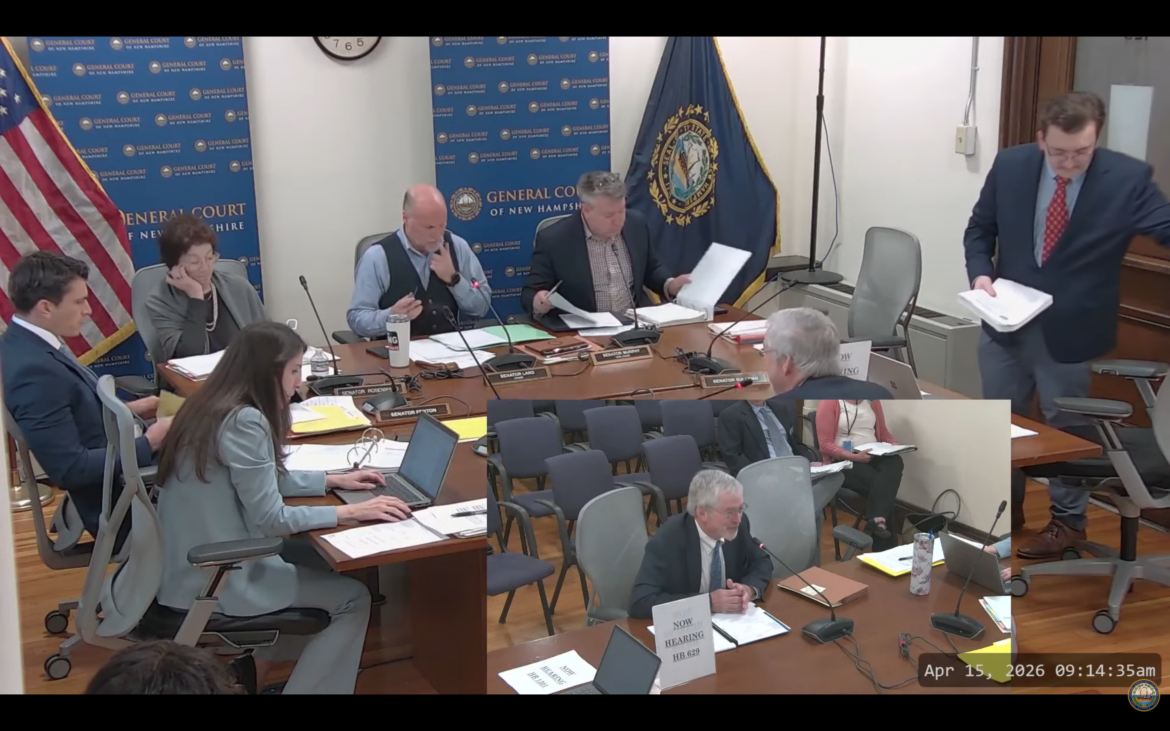
House Bill 629 would increase the cost of a boat decal to use New Hampshire waters by $5 per year, producing between $500,000 and $600,000 for the state’s dam maintenance fund.
The prime sponsor of the bill, Rep. Peter Leishman, D-Peterborough, said the proposal originated in a study commission on the state’s dams and how to raise the money needed to repair and rehabilitate them.
Dams are important to the state, noting the main one on Lake Winnipesaukee impounds 10 feet of water, Leishman said, adding if it goes out the water level would drop 10 feet.
The cost of a boat decal runs between $24 and $92 depending on size and would increase by $5 under the bill.
New Hampshire is somewhat unique in owning most of the dams in the state.
The legislature created the Water Resource Board in the 1920s to ensure the state controlled water rights that had been established when dams were used for mills and later for electricity. As privately owned dams were no longer needed or wanted the state took them over.
Now, the state wants to return as many dams to private associations or individuals as possible.
During the executive session to determine committee recommendations on the bills, Sen. Timothy Lang, R-Sanbornton, said the cyanobacteria problem needs a long-term solution, noting Senate Bill 598 would look at the big picture and not through a straw.
He said a larger plan is needed.
Sen. Keith Murphy, R-Manchester, said it appears the bills are hitting a small number of the people who benefit from lakefront property and not everyone who uses the state’s waters.
The committee recommended killing bills 629 and 1477 on 3-1 votes, and bill 1302 on a 4-0 vote.