By Dr. Peter Somssich, Doug Bogen, Roger Stephenson
Governor Ayotte is advocating for more nuclear power in New Hampshire, suggesting that doing so would lower electricity rates. However, customers pay bills not rates. According to the governor, nuclear power would: lower electricity rates, provide more “clean & green, carbon-free” energy and help our state become energy independent. Unfortunately, the governor is misinformed.
The electricity bills customers receive have two parts: the energy supply cost, and the delivery cost associated with transmission and distribution. By statute New Hampshire utilities sell the energy supply with no profit, their profit comes from the distribution of electricity through poles and wires. Supply costs for fossil fuels (gas and oil) are highly volatile based on seasons, global supply, and political instability (e.g. during a war). However, the delivery costs continue to increase substantially.
New Hampshire’s Public Utilities Commission (PUC) allows utilities a rate of return of close to 8% when they build and install infrastructure (often more than is needed). Don Kreis, the Consumer Advocate at the PUC, has highlighted that this rate of return, in such a low business risk, is too high by a few percent.
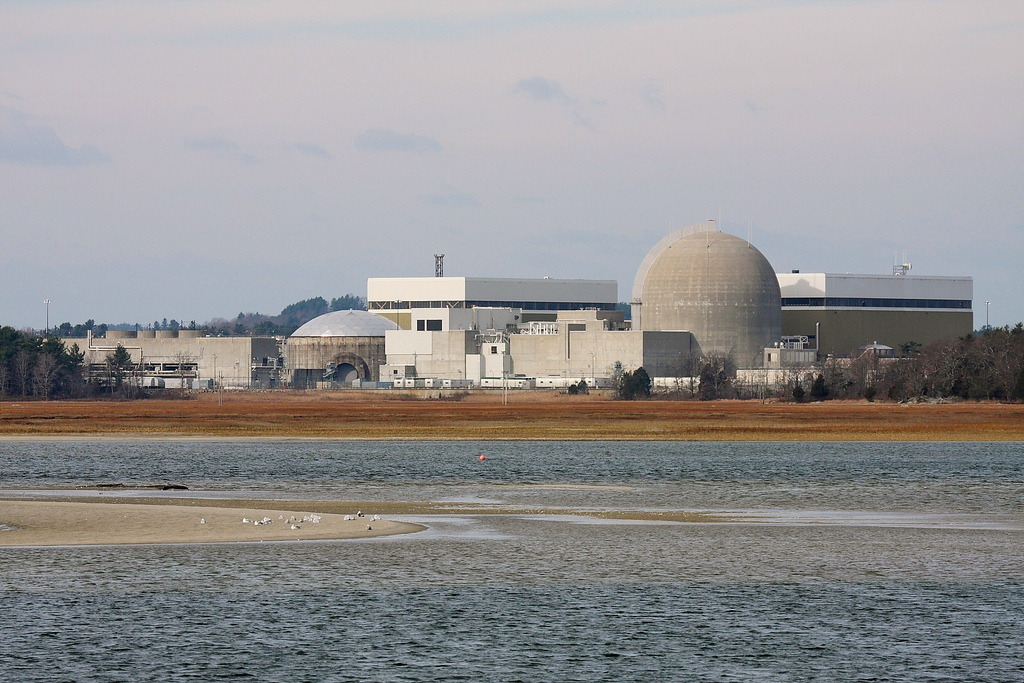
To lower customer bills, we must procure lower-priced energy supplies, and reduce delivery costs. Additional nuclear power in our state will not reduce electricity rates, because of how electricity prices are set. The daily price is determined by the Independent Systems Operator- New England (ISO) based on daily offerings it receives from suppliers, including Seabrook, the final price that all suppliers receive is the highest price for that day. Even if Seabrook were to offer its energy at 1 cent per kWh to NH utilities, it would still receive that highest price payment, which is what customers would pay. Modular nuclear plants would not change that even if they could be sited here at a reasonable cost. The Seabrook nuclear plant is currently not contributing to lowering utility bills.
Nuclear plants are regulated and permitted by federal agencies. Even if the governor could attract builders of smaller modular reactors (SMRs), we would discover that they would cost at least twice the original estimate, take 10 or more years to complete and not reduce our growing carbon emissions and climate impacts. (see R.Rosner, Bulletin of the Atomic Scientists, Dec. 2025, for details). Nuclear power is not a renewable energy source and its fuel costs will likely increase with greater demand and the “boutique” fuel needs of SMRs designs. While nuclear electricity generation does not emit greenhouse gases directly, it is neither “green” nor “clean” because the mining, processing, and manufacturing of enriched uranium fuel rods requires considerable carbon-emitting energy and creates a significant amount of waste (much of it radioactive). In addition, environmental impacts and routine plant operations emit radioactive elements that have been recently found – in an extensive Harvard medical study in Massachusetts (see Alwadi et al. Environmental Health, (2025) 24:92) – to be associated with increases in several types of cancer among nearby residents. Finally, spent fuel disposal still presents serious obstacles.
In addition, such plants also pose a national security risk associated with nuclear weapons (guards armed with automatic weapons patrol the Seabrook campus). While some advanced SMRs will be significantly safer, the energy may not cost less per kWh, because smaller units cost more to build per MW capacity. But we do not really know because none have been sited yet. Additionally, history of past nuclear accidents shows that they were mainly caused by human error and not technology failures (R.Rosner etc.).
Finally, even if we find a community willing to host small nuclear reactors, such plants are unlikely to be sited in New Hampshire within the next 10 years, and would not drive down electricity prices.
Politicians are being misinformed by the nuclear industry. But if the Governor really wants to drive down consumer electricity and energy costs and create more “energy independence”, she has a number of home grown options: (1) accelerate energy efficiency efforts, (2) increase support for proven and cheaper renewable energy sources such as solar, offshore-wind, hydroelectric, geothermal and biomass, (which have low or zero fuel costs and cost less to build) and (3) support utility-scale battery storage. Why would we Granite Staters want to gamble on more nuclear power?
———————————————————————————-
Dr. Peter Somssich, is a physicist with 40 years of experience, and former NH State Representative, on the Science Technology & Energy committee.
Doug Bogen, is executive director of Seacoast Anti-Pollution League based in Exeter, with and M.S. in Science and Environmental Education.
Roger Stephenson, prior to retiring served as the regional director for advocacy with the Union of Concerned Scientists. He holds an honorary degree from UNH for his decades of work for conservation and environmental protection.