By PAULA TRACY, InDepthNH.org
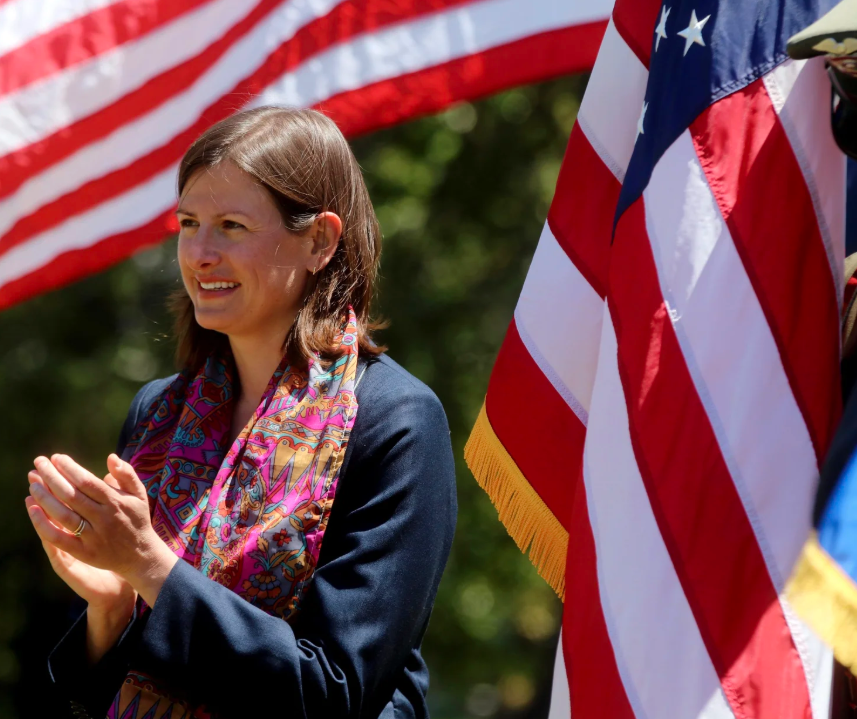
CONCORD – Hampton’s Carleigh Beriont has been chosen as the consensus candidate for the Democratic Party in the race for Secretary of State, and will run against incumbent Republican David Scanlan after a New Hampshire Democratic Party straw poll results were disclosed to her Tuesday.
The two other Democrats in the race – voter turnout expert James Butler of Portsmouth and state Rep. Patrick Long, D-Manchester – bowed out of contention and endorsed Beriont.
The election will be next Wednesday during legislative Organization Day and the only voters will be all incoming House and Senate members.
Democrats will hold 292 House seats, Republicans holding 107 and there is one Independent, a significant change from the current Republican majority. There are 160 new Democrats entering the House.
In the Senate, there will be a 15-9 Democratic majority over the past two year’s 16-8 Republican majority.
While the Democratic party would not publicly disclose their poll results among House and Senate members, Beriont, 36, who ran unsuccessfully as a Congressional candidate for District 1 this fall and is the current chair of the Hampton Select Board confirmed to InDepthNH.org that she was told by the party she was the straw poll winner.
Scanlan, 70, of Bow who has held the job for more than five years and was deputy under Democrat William Gardner for more than 20 years and was in House Republican leadership before that, officially announced his intent to seek re-election last Tuesday.
He said he has a shot at winning, but would need to find at least 100 Democrats and have all Republicans to win.
Scanlan said he has modernized the office and systems and has the where-with-all to take on the Democratic National Party which has voted to again take away New Hampshire’s First-in-the-Nation primary status. He said he is a known quantity while the other candidates are untested.
Beriont said in a phone interview last week that she would be willing to withdraw her name from consideration if she was not the top vote getter in the straw poll, but that did not happen.
Every two years, each political party may nominate one candidate for the job and only the 400 members of the House and 24 members of the Senate get to vote. It is a secret ballot vote and the voting will be held in a joint session.
The only other state post that is required for such a vote under the constitution is State Treasurer and so far there are no challengers to Monica Mezzapelle who has served in the position since December, 2020.
Only three states – Tennessee, Maine and New Hampshire – have their elected legislatures vote for Secretary of State.
Scanlan, who has held the post for more than five years, said he is the only experienced candidate running and said it is important that the position not become politicized now, particularly as the state may lose its Presidential First-in-the-Nation primary status from the national Democratic Party.
Butler, Long and Beriont all said expanding absentee voting opportunities, modernizing the office and keeping New Hampshire’s First-in-the Nation Primary were front of mind. The position pays $141,443 a year.
Beriont answered a number of questions for InDepthNH.org during the telephone conversation.
EXPANDING ABSENTEE VOTING
Beriont noted that many measures to change the way we vote has to come first through the legislature but she said she believes there will be a proposal to expand to no-fault absentee voting this session.
Currently, voters need an excuse – either they are to be out of state or unable to physically get to the polls to qualify for an absentee ballot.
“I think, having spoken with a lot of clerks, if we were to incorporate pre-processing, not dissimilar from what happened during the pandemic, that would be a real help just because, you know, that is something that definitely bogs down the process on election day and also it is something that would really expand people’s access to vote which we definitely want to do here, but not put more work on our clerks, or supervisors of the checklist or our moderators,” Beriont said.
She said she would not support the end to in-person voting, as has occurred in some other states.
“Our rituals are amazing,” she said. “I love the ritual,” calling election day her “favorite day.”
VOTING PURGE IMPACTS
Changes in law, including voter checklists being purged every year rather than every decade, have resulted in problems where women who have changed their last names or people who have moved within the same town have found themselves taken off the lists without their knowledge.
Many notices that voters have been taken off the list go to the old address and are not forwarded and voters don’t know they were taken off until they get to the polls.
Beriont said there could be an online system where people could submit the changes and the clerk or supervisor would be able to sign off on those changes to prevent such problems. She said she would like to see more data on this as an issue and impacts of the law change.
RISK POOLS
In addition to running the elections, the office has over 100 employees and various divisions under its control including the Bureau of Securities, Division of Archives and Records, Corporations Division, Uniform Commercial Code and Division of Vital Records.
One issue last year had to do with management of municipal employee insurance risk pools and how much municipal money should be held rather than distributed. The Secretary of State’s office is also in charge of risk pools.
Beriont said “one of the things I bring to this job is experience serving in municipal government including on the budget committee. Last year, when the conversations about the risk pools really kind of hit a fever pitch and we saw Bow getting stuck with a $2 million bill or Portsmouth with a $23 million bill we were asking ourselves in Hampton ‘what does this look like for us?’ I think that both Secretary Scanlan and before him Secretary (William) Gardner had fairly conservative estimates of the amount of money the risk pools should have, but I also think that it is important for us to recognize that we need people who are looking out for municipalities and who understand that getting mid-year assessments just means higher property taxes for people.”
Asked if it should be moved to the Insurance Department, she said, “I don’t know that the Insurance (Department) is necessarily the right place to move all that to. I would have to do some more digging to get a sense for what is actually not just more favorable for insurance companies but for municipalities, families and individual policyholders.”
PROTECTING THE FIRST-IN-THE-NATION PRIMARY
In her letter to legislators asking them for their vote, Beriont said protecting the First-in-the-Nation primary is important and has a lot to do with “doing democracy best.”
It is more, she said, than selecting a date to vote ahead of any similar election in the nation, as is required by law in New Hampshire.
“One of the reasons…the Democratic Party took it away is because of the restrictions enacted. So in order for us to demonstrate we do do democracy better – we obviously have free and fair and secure and accurate elections – but we need to make it easier for people to participate,” she said.
If elected, she said she wants to visit every high school in New Hampshire and encourage every eligible student to vote, impressing on them the importance of carrying out the state’s high percentage of voter turnout.
In her letter to legislators, she wrote “I am committed to upholding our tradition and serving as a model for the rest of the country. By modernizing local voting equipment, ensuring transparent procedures and removing excessive barriers to participation we can do democracy better.”
INCLUSION AND ELECTION DAY
During the interview, she said if elected she would start a listening tour across the state, listening to clerks and those in the Secretary’s office and use some Help America Votes money for grants to upgrade technology and do more education and outreach to make sure people who have been excluded are brought in.
On her first election day as Secretary of State she said if elected she would have a dedicated hot line and try to get around the state to as many polls as possible, waking up early and being out there to let voters across the Granite know that people recognize that “we are here to support them and excited to let them participate in our democracy.”