By GARRY RAYNO, InDepthNH.org
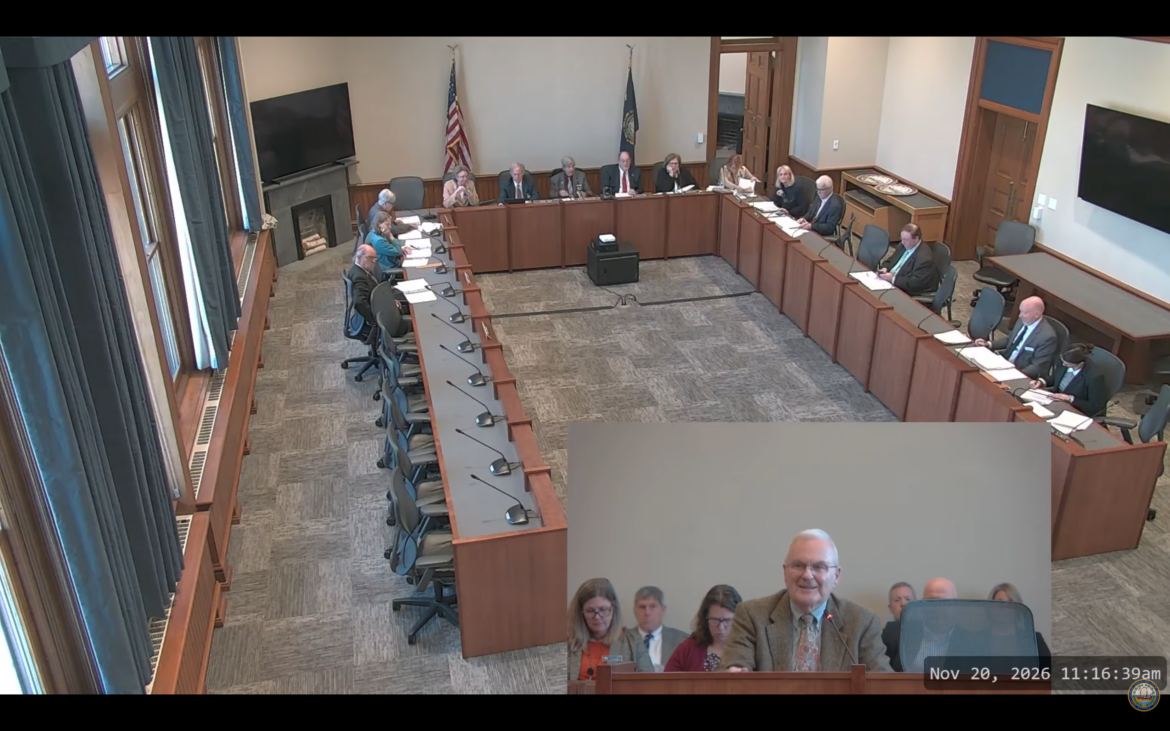
CONCORD — Youth Development Center Claims Administration and Settlement Fund administrator Gerard Boyle, said hiring a deputy will allow his office to increase the number of hearings and more cases to be settled sooner.
The former judge told the Joint Legislative Fiscal Committee Friday hearings will increase from six to eight a week and he said a new binding arbitration program should be in place after the first of the year.
“That will solve more claims faster because the cases will be heard sooner,” Boyle said. “The downside is more money comes out of the state.”
He also told the budget writers the $75 million a year that was agreed to by former Gov. Chris Sununu and former Senate President Jeb Bradley four years ago, will be needed for several years in order to settle the more than 1,700 claims filed with his office.
The $75 million per year was not included in the current biennial budget proposed by Gov. Kelly Ayotte although lawmakers decided to add $20 million for fiscal year 2026 and to earmark the money from the eventual sale of the Sununu Youth Services facility in Manchester to the settlement fund.
Last session the Republican controlled legislature passed a bill to move the money from the sale to the general fund, but the bill was vetoed by Ayotte and the legislature failed to override it.
The fiscal committee has approved $55 million more for the fund in two installments this year.
The estimated cost to settle all the claims is over $1 billion.
At Friday’s meeting, which was the last for the current session, Sen. Tara Reardon, D-Concord, asked Boyle where things stood with the cases brought by over 2,000 former residents who claim they suffered sexual, physical and mental abuse as children at the hands of state workers at the facility.
Boyle said as of Thursday his office has heard 79 cases since August when hearings resumed with the average settlement of $380,000.
He said settlements over $100,000 are paid over a 10-year period and those below that figure are paid off in a lump sum.
Reardon noted the agreement for $75 million a year and asked Boyle if lawmakers should revisit that figure and Boyle said he believes that is what is needed for the next few years as the cases are settled.
He said he has been encouraging attorneys to reduce their fees from settlements from 33 percent to 25 percent and a number of attorneys have done so.
When an attorney has done little work on a settlement, Boyle said, he awards them 25 percent.
These cases are not medical malpractice suits that go on for weeks with numerous expert witnesses, he noted. “To get 33 percent on a $1.5 million settlement is not justified,” Boyle said.
Committee chair Rep. Ken Weyler, R-Kingston, said he would like to see how much the legal fees are for all the settled cases as well as the attorney general office’s time and consultants.
“People ought to see how much of a gold mine this is for the legal profession.”
Boyle said he would put those figures together for the committee.
Reardon asked how many claimants not happy with their settlement have gone to superior court.
Boyle said to date none have, but he expects some to do so, which is their right, he noted.
But he said he does not know how many cases are pending before the superior court, noting if the person participates in the settlement program his or her case is stayed at the court.
The new law allows the Attorney General to veto any claim he believes is excessive, Boyle said, but he has not vetoed any settlements and he does not anticipate that he will.
Last year lawmakers — with Ayotte’s urging — changed the settlement program moving it from judicial oversight to the governor’s office.
Under the original law, the administrators decision was final, not allowing the executive branch through the attorney general to change any agreement.
The claimants sued saying the state was changing the program after they had agreed to another process but they were unsuccessful.
According to Boyle’s report, 2,269 claims have been filed with 2,176 pending.
Currently 1,443 are under review by the Attorney General’s Office, 204 have had hearings pending or scheduled and 36 have been decided.
As of Sept. 30, 425 claims have been settled, 79 have been withdrawn and 82 have been denied with 73 of those in the last year.
To date, awards have totaled nearly $240 million, with $103 million awarded in lump sum settlements, and $136.7 million in installment payments over 10 years.
Boyle projects the settlement fund will have a balance of $7.2 million at the end of this fiscal year.
Several cases that have gone to trial and the victims have received much more substantial awards than those who have gone through the settlement process.
Indigent Defense
The fiscal committee also approved two requests from the State Judicial Council to add to the budgets for indigent defense that the state must pay under the constitution.
The panel approved adding $2.75 million for hiring legal counsel for indigent criminal defendants, juvenile delinquencies, parents in abuse and neglect cases, and children who are in placement or alleged to be abused or neglected.
The additional money will bring that budget to $7.6 million for the 2027 fiscal year.
The committee also approved adding $1.6 million to the budget for non-counsel expenses such as witnesses and other items necessary to present an adequate defense for those unable to pay to defend themselves.
The additional money brings the non-counsel budget to $3.6 million for fiscal 2027.
Garry Rayno may be reached at garry.rayno@yahoo.com.