By ZACH LAIRD, InDepthNH.org
CONCORD — As a fellow mother with a young child that noticed diaper costs continuing to rise over time, Rep. Carrie Sorensen, D-Portsmouth is taking action to support families struggling financially in New Hampshire.
If the bill Sorensen is sponsoring passes in the next legislative cycle (LSR 2027-0197), it would see the inclusion of diapers under the state Medicaid plan. Sorensen said it would “allow the Department of Health and Human Services to fill out a waiver that would get them federal funding to help, so that there’s federal funding to help match with the state money, so that money can help get paid through Medicaid.”
“I have a two-year-old, and just all of the everyday prices that I’ve noticed that I have to pay for, things like healthcare, diapers, and food; all of that had started getting really expensive and I thought that diapers would be a nice way to help people get the care and money that they needed now, so that they could spend money on other things… I thought this would be a nice way to start to help the families in New Hampshire,” Sorensen said.
Sorensen continued that there are programs that can help families get food and others that help people get more affordable health insurance, but there wasn’t a way where parents could get relief from the cost of diapers. She said she typically buys diapers in bulk at B.J.s, and spends at least $100 for two boxes each time she restocks, though she isn’t sure how long it takes her to go through both packages.
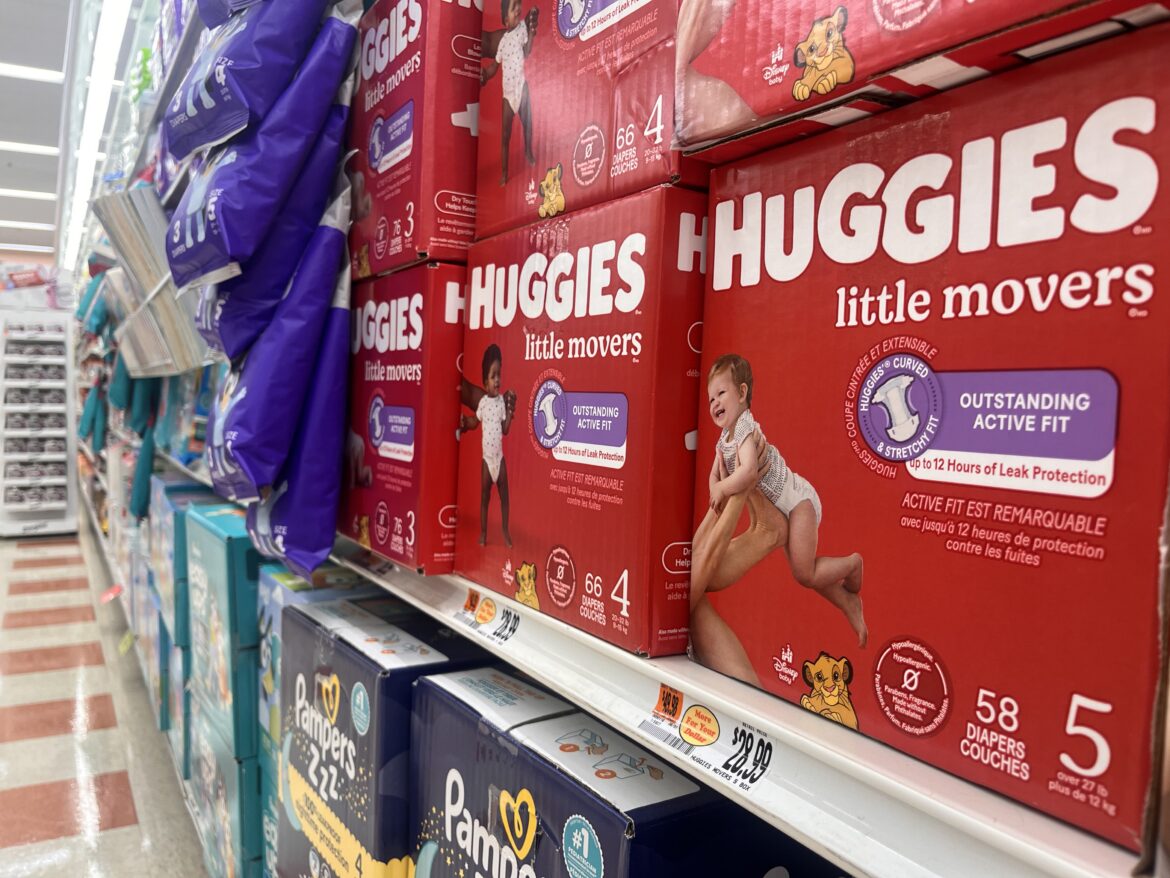
Data from the Institute for Research on Poverty shows that, nationally, diapers cost $100 a month per child, and that the cost of diapers has risen 22% since 2018. It said that about one in three mothers in the United States struggle with diaper scarcity and nearly half of U.S. infants and toddlers live in low-income families.
According to a national survey commissioned by the National Diaper Bank Network, 40% of households surveyed either struggled to afford diapers or keep enough on hand. The rate ultimately rose to 62% among households at or below 200% of the federal poverty guideline.
It noted that among families struggling with diaper costs, 45% skipped a credit card or other bill payment, 29% delayed a rent or mortgage payment, and 34 percent skipped meals to afford diapers. The Supplemental Nutrition Assistance Program (SNAP) and Women, Infants and Children (WIC) benefits cannot be used to purchase them.
Sorensen said she was surprised that the amount of families struggling with diaper costs wasn’t higher.
“I brought a very similar bill forward last year, and I think some people in the State House thought they could do enough to raise money or donate diapers to help the community, and I think they need to take a strong look at how much they were actually able to help the community compared to what this would do. I think they grossly under-helped and underserved the community. I hope this year when it comes, people are a little more cognizant of that,” Sorensen said.
A similar bill was filed by Rep. Sorensen for the 2026 legislative session, HB 1798-FN, relative to the coverage of diapers under the state Medicaid plan. House Republicans unanimously voted to table the bill on February 12, 2026. The bill died on the table at the end of the session.
The Manchester Diaper Pantry is a 501(c)(3) nonprofit organization that provides free diapers and diapering essentials to families regardless of income housing status. According to Tia Middleton, president and director of operations, the pantry serves between 150-200 individual children each month.
“What we see in our community, especially right now, is a very, very, very high need for diapers, because of the cost-of-living… These are moms that are working two jobs and still cannot afford to survive. They’re struggling between choosing protein at the grocery store and buying enough diapers for their kids,” Middleton said.
She said if the bill passes, she sees it helping families “on a new kind of level.”
Middleton acknowledged that diapers aren’t something that’s included in SNAP or WIC benefits, and said getting diapers to the families that need them — especially if they’re in rural areas and can’t often come out to Manchester — would be drastically different for those that are currently struggling.
She said helping families in New Hampshire will inherently help the health of the state itself, adding that the bill wouldn’t just benefit “one side of the aisle,” but instead it’s something that could help everybody (and) make sure the state’s economy is flowing and the financial burden is lessened for parents.
Middleton said when the next legislative cycle begins, she will testify as an individual and as part of the organization during public hearings in support of Sorensen’s bill.
The New Hampshire Women’s Foundation is another 501(c)(3) nonprofit that invests in opportunities and equality for women and girls through research, education, advocacy, and grant-making, according to Director of Policy Devan Quinn. She said the organization will also be supporting the bill.
Quinn said the organization is thrilled to support the bill, calling it a “targeted approach to help families, particularly moms with babies and young children.” She added it would provide immediate relief to people who are raising very young children and “give them a break they really need.”
“We’re really excited about this bill because everyone keeps hearing about the high cost-of-living in New Hampshire, and at the foundation, we know that that’s impacting women even more so. Women are more likely to live in poverty than men; women are more likely to work minimum-wage jobs… We absolutely need to pay attention to the high prices of groceries, rent, healthcare, and the legislature should pay attention to that,” Quinn said.