By DAMIEN FISHER, InDepthNH.org
A property line dispute turned into an existential struggle for a New Ipswich blueberry farmer, and she’s now fighting to keep her family business operating despite what she says is retaliation.
Lorraine Rodier’s blueberry farm has been in her family for generations, started when her grandfather Merrill Smith bought the Turnpike Road property in the 1950s. But she was forced to close the farm’s pick your own operation this year for the first time due to the ongoing legal fight with her neighbor, Nicholas Cormier.
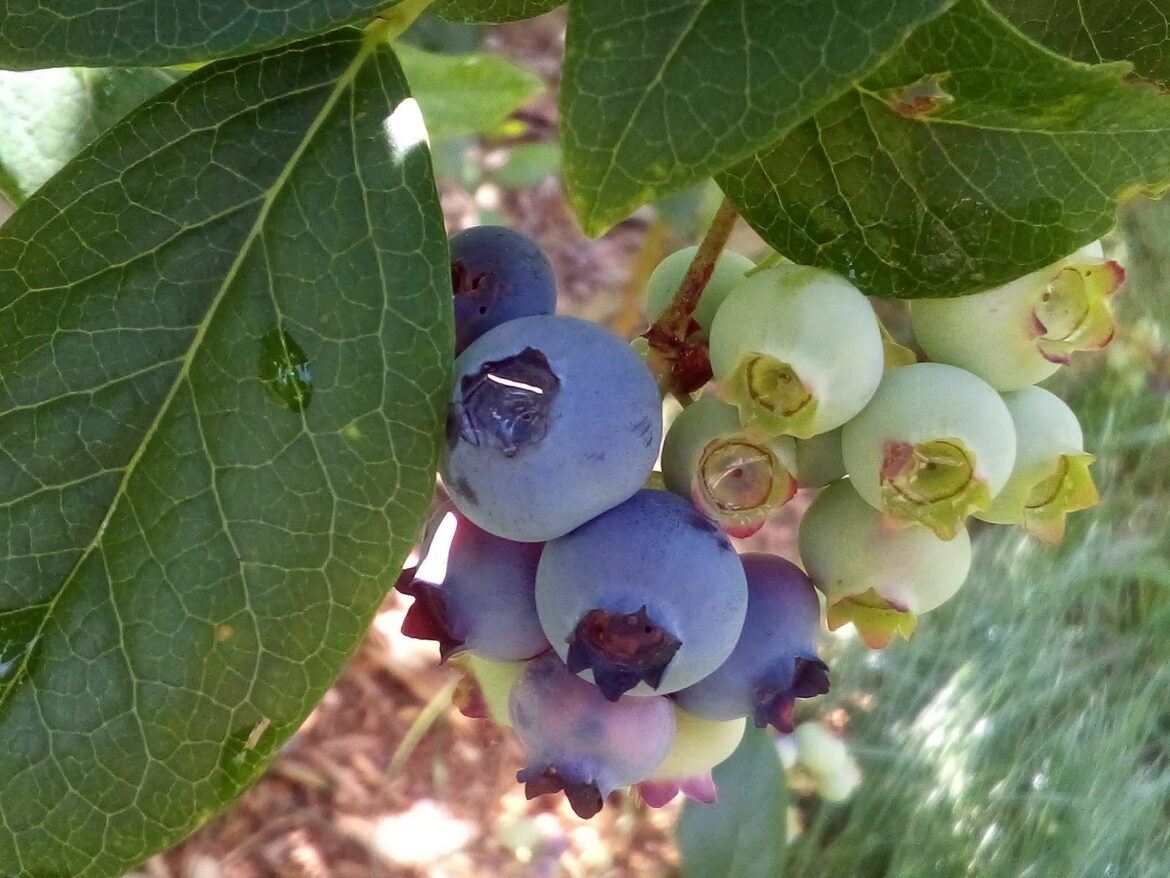
Merrill Smith planted the 1,100 blueberry plants on the 7-acre property, and the Smith family has been making a living off those plants since. The Smith farm operates a pick-your-own berry business, and sells blueberry tea, baked goods, as well as thousands of pounds of berries to wholesalers. As the summer dragged, Rodier finally opened up a one day event, partly to keep this year’s harvest from going to waste.
“The branches were bending over and rotting with fruit. It was the most devastating thing to see,” Rodier said.
Complicating matters is the fact Rodier no longer owns the name “Smith’s Blueberries.” The business started by Rodier’s grandfather is now “Smith’s Blueberry Farm.” That change was forced by Cormier and cost Rodier at least $150,000, she said.
“Every time, he has even a slight loss in court, there’s a retaliation,” Rodier said.
That retaliation has looked like police complaints, more damage to the disputed property, and even a recent incident in which someone shot out her kitchen windows with a BB gun.
“At least once a week, something new, crazy happens,” she said.
Rodier took charge of the Smith’s Blueberries from her mother in 2018, and bought it outright in 2022 with the help of a United States Department of Agriculture Farm Service Agency mortgage. Rodier soon learned that mortgage was tied to the original name.
Cormier, who runs NC Hauling and Property Maintenance, hung up the phone after this reporter identified himself and identified InDepthNH as the publication. He also did not respond to a follow up email seeking comment.
Rodier first took Cormier to court last year, but the dispute started in 2023, when Cormier hired a contractor to begin removing trees and a shed from a wooded area where their properties meet, according to court records. The land in question belongs to Rodier, she says, as did the trees.
The excavation took out several trees, including a 72-year-old weeping willow tree planted by Merrill Smith, she said. On top of the trees, one of Cormier’s crews removed stones from a stone wall that had once been part of the King James Highway, she said.
“It was older than America,” she said.
Along with the trees and stones, Cormier’s excavators cut off Rodier’s access to the public road, the lawsuit alleges. The deeds give Rodier access to the road from Cormier’s property, but there is now a new five-foot drop in front of the start of the old easement.
Rodier claims Cormier threatened to kill her pigs if they show up on the disputed land, and there have been multiple complaints to police from both Rodier and Cormier. The USDA tried to settle things through mediation. According to court records, Cormier refused to meet with mediators.
Last year, Cormier hired a new contractor to again remove trees from the property, according to court records. That’s when Rodier filed her lawsuit against Cormier. Last September, Rodier successfully got an injunction against Cormier to stop any more damage to her property. But that has not stopped the lawsuit, or the bad blood, she said.
Cormier was issued with a contempt ruling in December, and in January, Rodier lost her business name.
“That was one of the most egregious retaliations,” Rodier said.
She admits that her business’ status had lapsed with the New Hampshire Secretary of State, and she was behind on her taxes. Cormier filed his own paperwork and took the “Smith’s Blueberries” name. Cormier next had a lawyer send Rodier a cease and desist letter telling her to stop using his business name. To be clear, it does not appear that Cormier farms blueberries on his property. He followed up the cease and desist by contacting the USDA. Court records state Cormier spoke to a USDA representative and told them he owned the farm name, and that Rodier was behind on her taxes.
Cormier’s call to the USDA, along with his taking of the Smith family business name forced Rodier to start a new business under the slightly changed name of “Smith’s Blueberry Farm.” It also forced her to take out a new mortgage with the USDA. Her new, higher interest rate will cost her more than $150,000 over the life of the loan.
According to the email Rodier received from New Hampshire Farm Loan Program Loan Officer Monica Salmon, Cormier called the agency in March to ask about getting Rodier removed from the FSA mortgage since he now controlled the name of the business. Cormier was rebuffed by Salmon in his attempt to take the loan, but the call prompted Salmon to check the business status with the New Hampshire Secretary of State’s Office.
The legal problem for Rodier was that her replacement business entity, Smith’s Blueberry Farm, was not the same entity that was approved for the original loan, according to Salmon.
“The FSA borrower must be the operator of the farm to remain eligible for FSA program benefits and the operator must be legally able to conduct business in the state of NH,” Salmon wrote. “I understand you have formed a new entity – Smith’s Blueberry Farm LLC. This requires you to request a ‘transfer and assumption’ from FSA … the new operating entity will need to 1) be determined eligible for program benefits and 2) if eligible, assume the debt. You will need to assume the debt under new rates and terms; all interest accrued will be capitalized into the new loan.”
The name change and the legal drama is causing headaches for Rodier in other ways. She lost at least one contract, and because there are two Smith’s blueberry businesses she now has to deal with an increased level of complicated bureaucracy when it comes to federal agriculture grants and contracts.
Rodier is undeterred, however. She plans to keep fighting in court, and she will keep growing her family blueberries.
“I want to feed people. That’s all I give a crap about. My grandfather wanted to feed people, my grandfather’s gone, my mother’s gone, but they’re both out there,” she said nodding to her land. “That is the mark I want to leave.”