By PAULA TRACY, InDepthNH.org
CONCORD – Health provider shortages, affordability and adequate information about insurance coverages are issues facing many women in rural New Hampshire, according to a recent study.
The study calls for change and more analysis and oversight.
Two Executive Councilors commented on what the document means and one, Executive Councilor Karen Liot Hill, D-Lebanon, called it a “wake-up call” with a growing number of “maternity deserts” in the state.
The lengthy study comes out at a time when there is considerable regional media attention on a tragic case in neighboring Massachusetts in which Lindsay Clancy, 35, of Duxbury is being tried for the 2023 deaths of her three children.
She pleaded not guilty and cites postpartum psychosis and the care and medication she received as the cause.
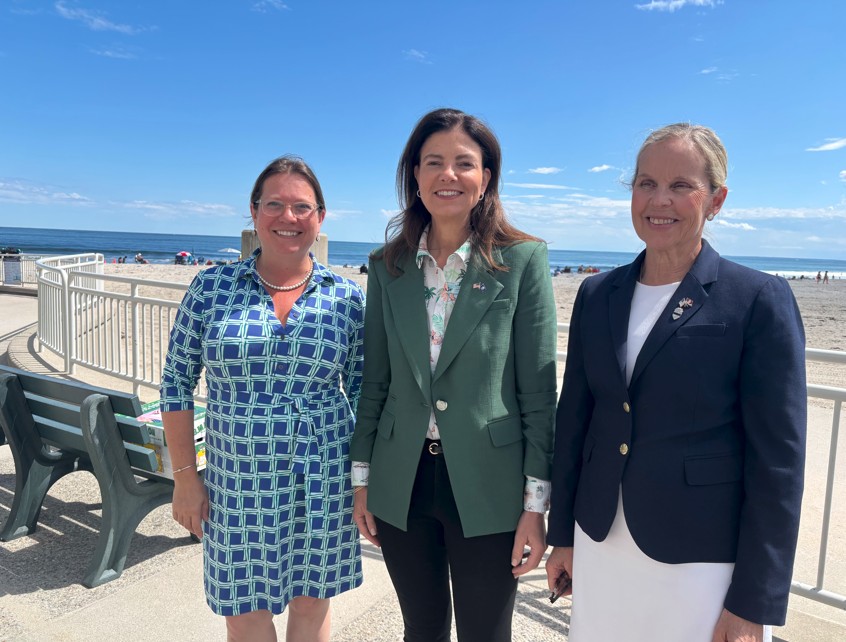
While Clancy had access to maternal care, the fact that other women with the same diagnosis may live in the Granite State and may be struggling with access to care is of concern particularly to Karen Liot Hill and fellow Executive Councilor Janet Stevens, R-Rye.
The report, which is here, https://www.insurance.nh.gov/sites/g/files/ehbemt861/files/inline-documents/sonh/womenshealthcareaccess_in_nh.pdf calls for strengthened regulatory oversight of insurers on women’s health and preventive care through the state’s Insurance Department and more transparency and disclosure about costs that could be incurred.
In a joint department statement, David J. “DJ” Bettencourt, commissioner of the state Insurance Department and Keith E. Nyhan, deputy commissioner, said the independent report by Wakely and Health Management Associates, including surveying and interviewing stakeholders and consumers across the state, did not speak to the state’s position.
They said it sought a “current outlook of women’s health in New Hampshire.”
After the initial contract for this study was voted down, 3-2 in May, 2025, it was revised and approved unanimously.
Liot Hill and Stevens, R-Rye, are the only women on the five member council and the only ones who initially supported the $265,055 federally funded study.
InDepthNH.org reached out to all executive councilors to comment on the report but received only replies from Liot Hill and Stevens.
The majority of the council, including Executive Councilor Joe Kenney, R-Wakefield, initially did not support the study citing concern it could drive up costs but was satisfied by changes and explanations that let the study move forward.
The state has one of the highest rates of depression and anxiety for new moms in the country, and behavioral health, including substance overdoses, which is the leading cause of maternal mortality in New Hampshire.
In the past two decades, 11 maternity departments in the state closed.
The report also showed Coos County has only one obstetrician and Northern Grafton County has three.
“Access to midwifery services, one approach to expanding rural access to perinatal care, is still extremely limited” in the state’s north, the report states.
Telehealth services are growing but waits for care are sometimes long.
Liot Hill said “this report should be a wake-up call. Eleven of New Hampshire’s 26 labor and delivery units have closed since 2000 and Sullivan County – part of my district -is now considered a maternity-care desert with no hospital offering obstetric care. Rural Granite Staters are at a particular disadvantage.”
Stevens said she spoke with Commissioner Bettencourt about the report this week.
As a follow up to an email submitted to Bettencourt, Stevens spoke with Commissioner Bettencourt about the report and the categories of discussion included provider reimbursement and increased oversight and accountability of insurance companies, behavioral health, substance abuse disorder treatment and the need to evaluate infertility care as an Essential Health Benefit.
Bettencourt responded in writing to Stevens, “the provider/payer disconnect described in the report caught my attention as well. Stakeholders reported circumstances in which providers believed services were not reimbursed, or were not reimbursed timely, while carriers indicated that their services were not covered and attributed the problem to billing. The report appropriately characterizes that as stakeholder feedback rather than a regulatory finding of carrier misconduct. Nonetheless, that type of experience is exactly the sort of signal regulators should investigate.”
The commissioner also went on to tell Stevens, “A benefit that exists on paper is of limited value if administrative barriers prevent patients from receiving it in practice.”
Bettencourt also noted that a lack of access concerns for those with substance use disorders, infertility and eating disorders are “significant. Patients described substantial difficulty obtaining behavioral-health, SUD and eating-disorder treatment, particularly in northern New Hampshire including traveling to Boston for care. I would distinguish, however, between coverage and access. Adding a statutory insurance benefit does not by itself create clinicians, treatment facilities or network capacity. In some circumstances a mandate may improve access; in many others it may increase premiums without resolving the underlying provider shortage. That is why I believe we need to understand the precise barrier before prescribing the solution. Where existing law already requires coverage or parity, our job is to enforce it,” the insurance commissioner wrote.
“Where the problem is network adequacy or workforce capacity, we need to work with our partners on those issues. And where there is a genuine benefit gap, that should be evaluated on its merits, including its clinical value, access impact and cost.”
The document, Bettencourt said, and its recommendations are helpful noting it “recommends more targeted oversight, oversight of maternal-health and mental health metrics, clearer benefit information, network analysis, and even secret-shopper approaches to assess provider-directory accuracy.”
Stevens, whose husband is a retired Seacoast area physician, has been an outspoken critic of the slow pace in handling outstanding claims payments to hospitals with insurance companies delaying for months up to $300 million.
MOMNIBUS 2.0
Last year the legislature passed and Republican Gov. Kelly Ayotte signed the bipartisan Senate Bill 246, known as “Momnibus 2.0.” This bipartisan piece of legislation added protections to improve maternal mental health screening, reduce barriers to mental health care, and ensure providers are equipped with the support they need to address maternal depression.
According to supporters, the new law supports independent birth centers and trains Emergency Medical Services providers in rural communities on labor and delivery emergencies.
It also ensures job security for Granite Staters using employer-sponsored family leave and provides leave for parents attending postpartum and pediatric appointments. It also expands access to home visits and allows for a study on perinatal peer support.
It also looks to find ways to increase access, while guaranteeing health care premiums remain flat.
LIOT HILL CALLS FOR CHANGE
The Upper Valley resident and Executive Councilor Liot Hill said although the study was quantitative “the consistency of what the Department heard from patients, providers, and advocates demands action. We need to protect maternity care, strengthen maternal and mental health services, require accurate provider directories and clear coverage information, and hold insurers accountable. A woman’s ZIP code or income should not determine whether she can receive timely, appropriate health care.”
Stevens, said the point of the contract was to research and assess women’s health services, particularly postpartum care, and to explore options for expanding coverage within New Hampshire’s Essential Health Benefit benchmark plan.
“Maternity/perinatal care access is collapsing, especially in rural New Hampshire,” Stevens said. “As the study pointed out “maternity care deserts’ put women at a great risk of not receiving adequate prenatal care and puts them at heightened risk of delivering outside of the hospital. Statewide hospital consolidations…resulted in the closure of critical labor and delivery” units.
The report indicated rural women are more likely to have fewer than 10 prenatal visits compared to women living in other areas of the state and that “requires immediate attention.”
Wait times for behavioral health are also “completely unacceptable,” Steven said.
Waits run six months to a year for older adults waiting for behavioral help and longer for children, depending on geography, the report states.
“All three participant groups within this study identified access to behavioral health as a top concern. The state of New Hampshire must increase access to care for women struggling with behavioral health or Substance Use Disorders. The New Hampshire Maternal Mortality Review study has shown that Substance Use Disorder continues to be a main driver of maternal mortality in New Hampshire. From 2020 to 2024, nearly half of all pregnancy related deaths were due to drug overdose, followed by cardiovascular conditions, embolisms and suicide,” Stevens noted.
She also added that the report found affordability and coverage confusion “pervasive.”
“Women are hit disproportionately harder in New Hampshire. Completely unacceptable,” she said.
Insurer accountability/reimbursement is a recurring complaint noted in the report.
“We need greater resources to hold insurers accountable to protect providers and patients. Unconscionable delays in payments to providers for covered maternal care ultimately hurts women. Women should not have to fight for these critical services.”
(Editor’s note: Issues raised in this story relate to depression, suicide and mental health. For emergency access to that help dial 9-8-8 any time of day.)