By DAMIEN FISHER, InDepthNH.org
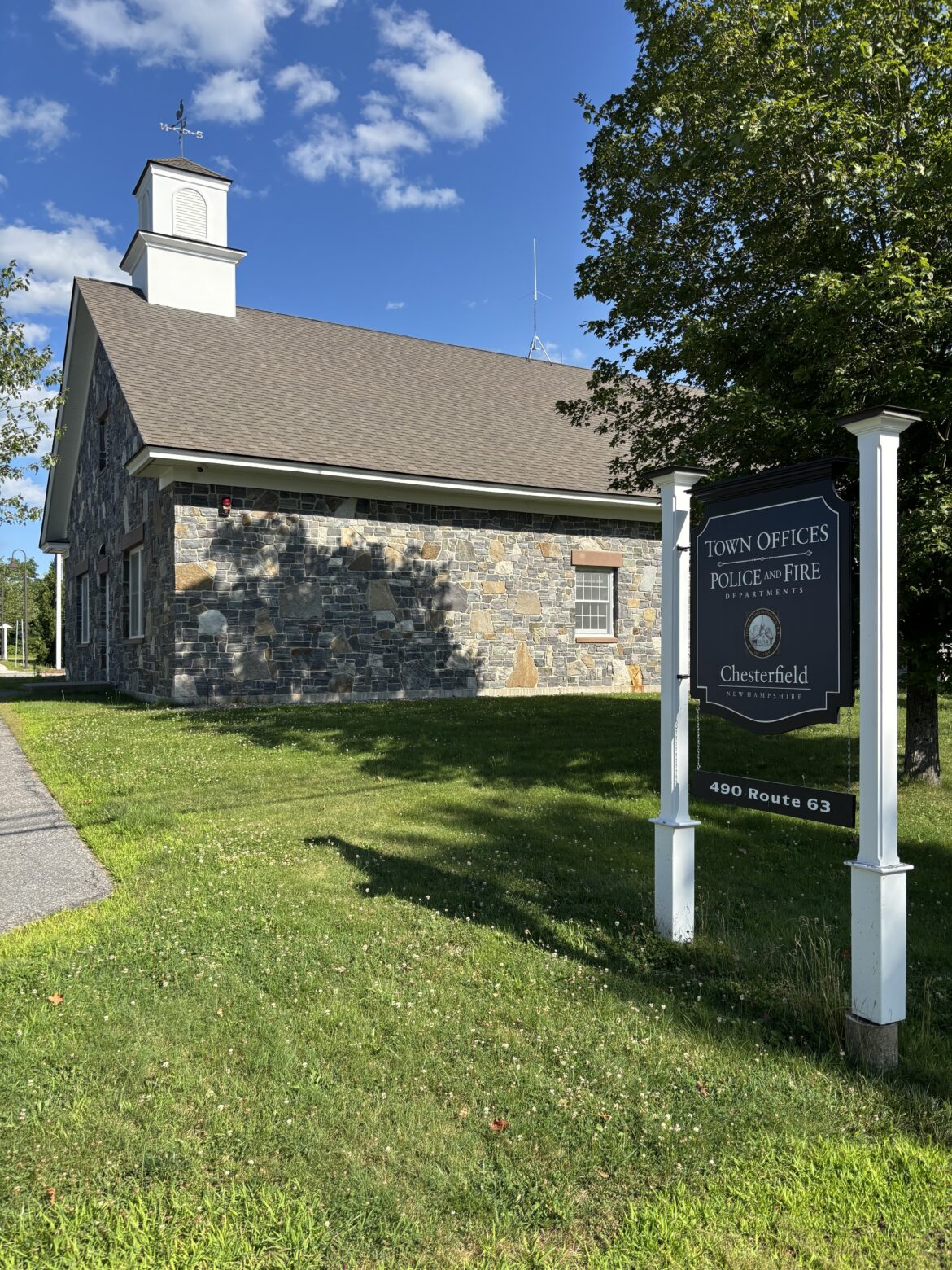
When Chesterfield Police Lt. John Ciarcia tried to stop Chief Lance Rouse from illegally underpaying the department’s staff, Ciarcia was put on leave, investigated on trumped up charges, and finally fired after a kangaroo-court style hearing with the town’s Selectmen, according to Ciarcia’s new lawsuit.
“[Ciarcia] has evidence to prove by preponderance of the evidence that [Rouse], an employee of the Town and department head, acted in bad faith, malice, or retaliation, because [Ciarcia] was challenging [Rouse’s] overtime and lunch break policies, which is a public policy as outlined in federal and state law,” the lawsuit states.
Ciarcia, a veteran police officer, filed his lawsuit in Cheshire Superior Court last month seeking to overturn the Select Board findings that Ciarcia lied about his time card, and to block the New Hampshire Attorney General’s Office from putting him on the Exculpatory Evidence Schedule.
The EES, also known as the Laurie List, is a list of police officers who have engaged in some form of misconduct that could impair their credibility as a witness. Lying and falsifying records is an obvious cause of a Laurie List entry.
Ciarcia’s attorney, Marc Beaudoin, told InDepthNH.org that Rouse himself may have engaged in falsifying records in his retaliation campaign against Ciarcia. Ciarcia was finally terminated in June of this year, after a months-long ordeal of suspension, internal investigation, and biased hearings in town. But Rouse officially notified New Hampshire’s Police Standards and Training Council in March with a Form B that Ciarcia was out, Beaudoin said.
“Chief Rouse sent a Form B to PSTC on or about March 7, 2026. On the back side, he checked off the box that stated that he completed an internal investigation and by preponderance of the evidence, he found that Mr. Ciarcia committed the policy violations (sustained findings). Mr. Ciarcia was not interviewed for that internal investigation until almost a month later on April 2, 2026,” Beaudoin said in an email.
Rouse did not respond to a request for comment.
Police departments notify PSTC of officer resignations, retirements, and terminations using Form B. The Form requires the departments to notify PSTC if the officer is leaving for reasons that could trigger misconduct investigations by the PSTC’s Conduct Review Committee.
InDepthNH.org obtained Ciarcia’s Form B on file with PSTC through a Right to Know request. However, this form is dated May 22 of this year, and signed by Rouse on June 9. PSTC Lt. Daniel Florent told InDepthNH.org that is the only Ciarcia Form B on file.
Ciarcia started with Chesterfield last year, taking the second in command position under recently hired Rouse. As he settled into his position, Ciarcia became concerned that Rouse was not only not paying overtime to officers who worked more than 40 hours a week, Rouse was also telling him to essentially lie on his time cards to keep the documented hours at or under 40 hours a week regardless of the time actually worked, according to the lawsuit.
In February of this year, Ciarcia finally met with Town Administrator Alissa Thompson to get clarity on the overtime situation. The conversation ended with Thompson telling Ciarcia she would speak to Rouse, the lawsuit states.
Four days later, Rouse told Ciarcia that he was placing the lieutenant on paid leave because Ciarcia was spending his lunch breaks at his home nearby. Rouse gave Ciarcia the opportunity to resign rather than eventually be fired. Ciarcia refused to quit, and a few days later Rouse told his lieutenant that he was now subject to an internal investigation, according to the lawsuit.
The whole process Rouse used to get rid of Ciarcia betrays the retaliatory motive, according to the lawsuit.
“The internal investigation allegedly commenced on January 28, 2026. [Rouse] never outsourced the internal investigation to another agency. [Rouse] was the complainant, the investigator, the Loudermill [employee due process] hearing decision maker, and the department head that recommended termination to the Board. Essentially, [Rouse] made himself the Judge, Jury, and Executioner,” the lawsuit states.
Additionally, Beaudoin points out in the complaint, had Ciarcia resigned when first placed on leave in February — before he was even told about the investigation by Rouse — he would have essentially waived any rights to appeal his termination.
Rouse served as the sole investigator into Ciarcia’s alleged time card misconduct. After months of this alleged investigation, Rouse sent Ciarcia a letter on May 1 stating that Rouse planned to ask the Board of Selectmen to fire him for overtime misuse, falsifying his activity logs, and insubordination.
Beaudoin writes in the lawsuit the allegation Rouse brought against Ciarcia amount to scriveners errors and software glitches, and there is no proof Ciarcia was falsifying his time cards to show he was working when he was not on duty.
On May 20, Ciarcia and Beaudoin met with Selectmen, but they were blocked from introducing evidence clearing Ciarcia of most of the allegations, according to the complaint. When the Board issued its finding of sustained misconduct, it refused to entertain a motion to reconsider, despite numerous factual errors, Beaudoin wrote.
Rouse went ahead with the termination, and sent a letter to the New Hampshire Attorney General’s Office recommending Ciarcia be put on the Laurie List.
The allegations in the lawsuit serve as another illustration of problems with the EES. Officers can have their careers ruined by being put on the list of credibility-challenged cops. But police chiefs have nearly unchecked authority to put officers on the list, creating a vehicle for retaliation and revenge.
One notorious example is Alexandra Drake, who was put on the list in retaliation for reporting her superior’s sexual harassment while she was working for the New Boston Police. Drake was eventually paid $160,000 as part of her settlement with town.