By JESSICA WILLIAMS, senior policy analyst
Thursday, July 30, marks the 61st anniversary of the passage of the federal Social Security Amendments of 1965, which established Medicare and Medicaid. For more than six decades, these programs have provided essential public health coverage for millions of Granite Staters.
On this anniversary, the NHFPI team examines who benefits from these programs today, as well as what recent federal and state health policy changes could mean for the future of health coverage in New Hampshire.
Medicare
Medicare is a federal program that provides health coverage primarily to individuals age 65 and older as well as for younger people with certain disabilities or qualifying health conditions. Medicare has varying plan options, some of which require premium payments or are operated by private-sector companies with approval, and eligible enrollees can select among those options.
Traditional Medicare generally covers most primary and preventive care, inpatient and outpatient hospital services, and certain short-term home health care. Enrollees can also purchase prescription drug coverage, commonly known as “Part D,” or can enroll in a private Medicare Advantage Plan, which often includes additional benefits such as dental, vision, and hearing coverage.
As of April 2026, 359,292 Granite State adults, or 25.4% of New Hampshire’s 2025 population, relied on Medicare either as their primary source of coverage or in combination with another health insurance plan.
Medicaid
Medicaid, a program distinct from Medicare, is a federal-state fiscal partnership that provides health coverage to eligible populations, including people with low incomes, individuals with disabilities, children in households with low incomes, certain older adults, and pregnant individuals. The program helps ensure access to health care for residents who may otherwise be unable to afford private insurance.
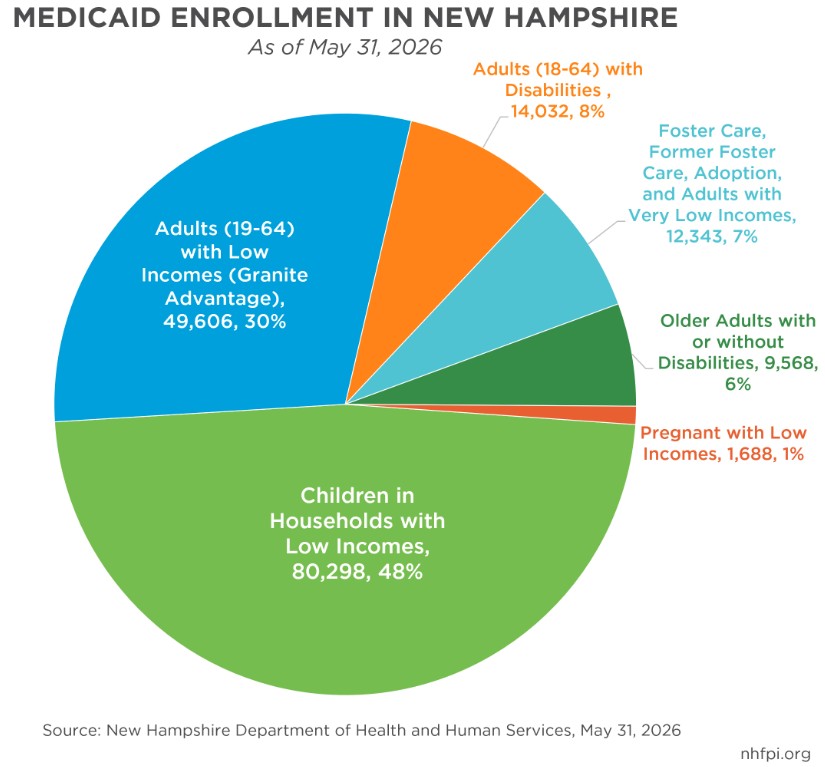
As of the end of May 2026, 168,652 New Hampshire residents were enrolled in Medicaid, representing about 11.9% of the estimated 2025 statewide population. This total included 9,568 older adults age 65 and older and 81,415 children under age 18, including children with severe disabilities and those in foster care. In 2024, approximately 73.0% of Medicaid enrollees lived outside of the state’s three most populous municipalities, including Manchester, Nashua, and Concord.
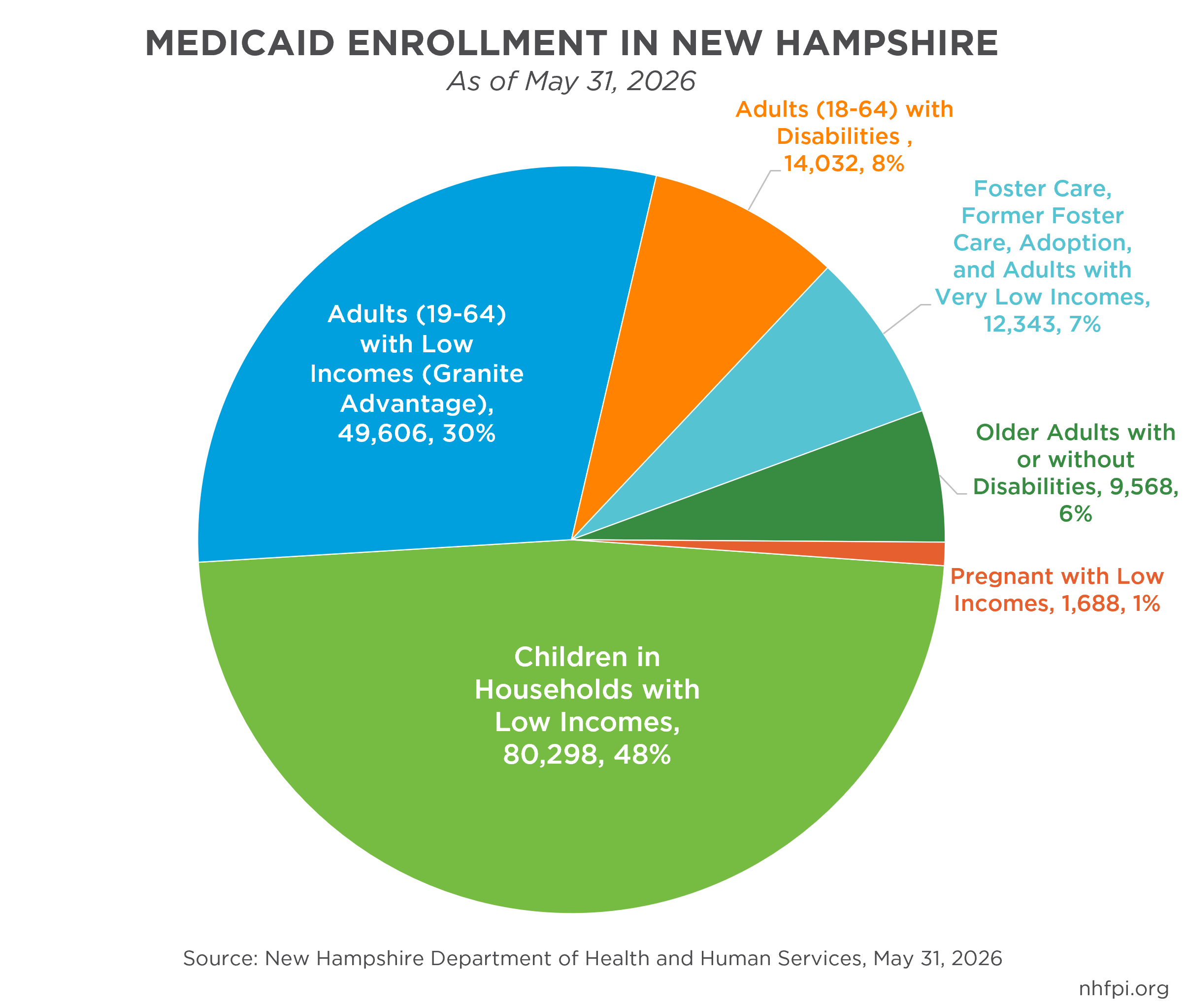
The passage of the federal Affordable Care Act and subsequent Medicaid Expansion in New Hampshire provided expanded coverage for adults with low incomes up to 138% of the federal poverty guidelines, or $22,025 for a household of one and $45,540 for a household of four in 2026. As of May 2026, 49,606 adults were covered through Medicaid Expansion, also known as the Granite Advantage Health Care Program in New Hampshire, representing nearly a third (29.4%) of the total Medicaid population.
Looking Ahead
Recent federal health policy changes could significantly impact access for the thousands of Granite Staters who rely on Medicaid, particularly for adults enrolled in Granite Advantage. Beginning no later than January 1, 2027, most Granite Advantage enrollees will be required to work or participate in another qualifying community engagement activity for at least 80 hours per month, unless they qualify for an exemption.
Although an estimated 75% of the state’s Medicaid adult population is already working, these new requirements are expected to increase administrative burdens for both the State government and people seeking to gain or renew their coverage. According to early estimates, anywhere from 14,000 to 29,000 New Hampshire Medicaid enrollees, or 28.2 to 58.5% of the May 2026 Medicaid Expansion population, could lose coverage by 2028. The number of Granite Staters who ultimately lose Medicaid coverage in New Hampshire will depend largely on how state policymakers, including the Legislature, the Governor, and state agencies, choose to implement these new requirements.
Other changes, including new cost-sharing requirements and more frequent eligibility checks, may also lead to coverage losses, while reductions to current Medicaid financing structures will limit available federal funding to maintain health services in New Hampshire.