By PAULA TRACY, InDepthNH.org
CONCORD – A seven-member solid waste site evaluation committee could be created in the state to evaluate applications for new solid waste facilities.
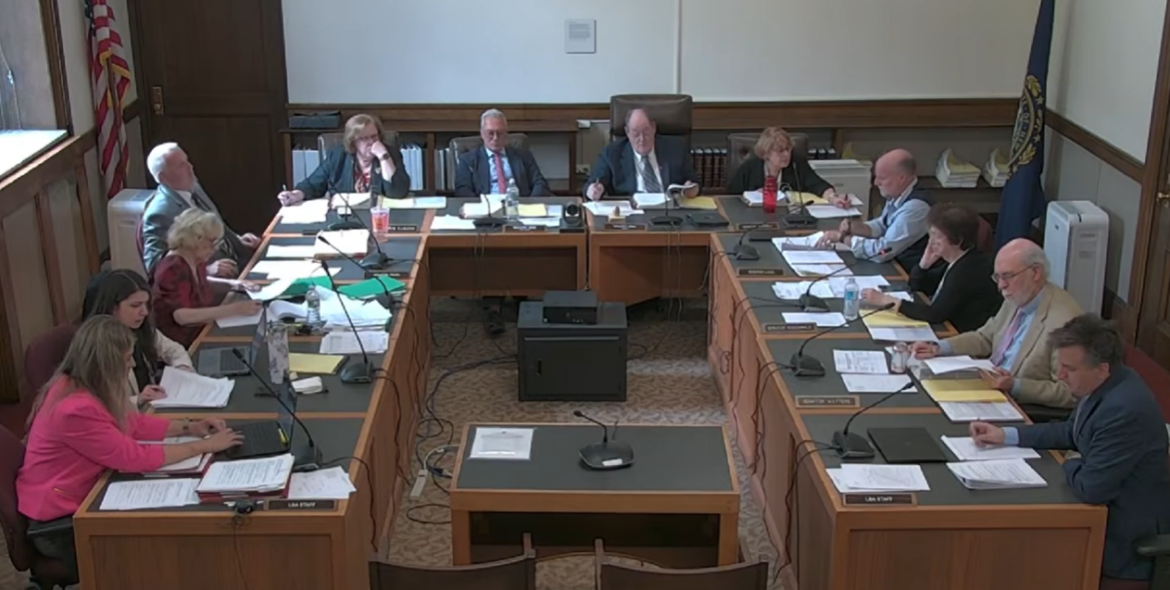
After a number of landfill-related bills failed this year, the Senate Finance Committee voted Tuesday to support House Bill 707 which was amended by state Sen. Howard Pearl, R-Loudon.
He crafted the measure in consultation with Gov. Kelly Ayotte, a fellow Republican who has in the past taken sides to support residents of nearby proposed facilities in opposition.
The committee worked on amendment language about public health and safety. The bill defines a landfill expansion and permits added capacity, he said.
The body would be similar to the current SEC related to energy facilities, Pearl noted.
He said and it states that the Department of Environmental Services would still decide on a need and capacity for such facilities, not the committee.
It allows the committee to agree to timelines and clarifies that if there are violations, the DES must act on compliance. He said it focuses on using existing facilities rather than land that were once waste sites.
Pearl conceded that not all are on board, though he was hoping to bring something forward that all could agree to. “I believe it sets in place a very good process,” he said.
Some communities have expressed interest in more local control.
State Sen. David Watters, D-Dover, commended Pearl for six years of work on the subject.
“It really has come a long way,” Watters said. “I think it is important to move forward,” though he alluded to the possibility of a committee of conference on the bill between the Senate and House if it passes the Senate.
Chair of the Senate Finance State Sen. James Gray, R-Rochester, said he would not be putting the bill on the consent calendar but allow for discussion as a regular calendar item because it is “hot off the press.”
There was some discussion about language in the bill which was amended and replaced from “human health” to “public health and safety.”
State Sen. Cindy Rosenwald, D-Nashua, who said she got the amendment 45 minutes before the start of the meeting, said she tried to look it up and there is no definition of public health and safety in the law.
Pearl stressed that the bill “does not legislate outcomes” and “includes local voices.” He noted that current contracts and obligations are in place and will remain as such.
“This is about the siting of new landfills,” he stressed.
A copy of the amended bill is here https://gc.nh.gov/bill_status/billinfo.aspx?id=586&inflect=2
The bill reads “there is a compelling state interest in maintaining adequate, reasonably priced disposal capacity for solid waste generated in New Hampshire…As a result of changes in federal and state law over the past 50 years and the economics of solid waste management, waste disposal facilities are sited regionally in New Hampshire, but they provide disposal capacity for municipalities throughout the state, often irrespective of whether a municipality is in close proximity to the disposal facility…The siting of new disposal capacity is often locally controversial and the use of local land-use regulation to prevent siting of new capacity can result in the frustration of the state’s interest in maintaining adequate capacity. The general court prefers that new landfill capacity be developed in expansions of existing permitted landfills instead of on greenfield sites because existing sites have already been carefully studied before being permitted and have been found suitable for landfilling by the department of environmental services.”
As for expansions to existing landfills it said DES “typically has decades of familiarity with conditions at such sites and the expansion of an existing use is generally consistent with the overall objectives of land-use controls…The state’s preference for such expansions warrants that the state’s regulatory and policy interests take precedence over local regulation and restrictions, particularly because the department’s rules provide robust protection….”
“This legislation establishes a preference for siting of new landfill capacity on land adjacent to existing permitted landfill capacity and gives the department of environmental services comprehensive exclusive authority to approve the siting of such new capacity,” it states.
The bill also establishes a committee to be known as the New Hampshire solid waste facility site evaluation committee consisting of seven members. It would include the commissioner of the department of business and economic affairs, or designee, who shall serve as chair, the commissioner of the department of environmental services, or designee and five members and, as provided by RSA 149-M:68, alternate members, appointed by the governor with the consent of the executive council, including a member with expertise in municipal planning, a member with expertise in achieving natural resource protection in the context of large project development, a member who has expertise in the private waste management industry, a member who serves on the state conservation commission, and a member who is representative of the business community.
Members, if approved, would serve five-year terms and until their successors are appointed and qualified.
The committee, if approved would “evaluate an application on the merits after acceptance and timely grant or deny the application in accordance with this subdivision, incorporating in its decision such findings and rulings as are reasonably necessary to support its decision….include with any decision the reasonable terms and conditions of any certificate issued under this subdivision, including, without limitation and if warranted, bonding or other form of security for performance…and assist the public in understanding the requirements of this subdivision.”
The bill could come before the full Senate as early as Thursday when it meets beginning at 10 a.m.