By PAULA TRACY, InDepthNH.org
CONCORD – More than 20,000 victims of crime who have been waiting months for restitution checks from perpetrators have two bits of good news this week.
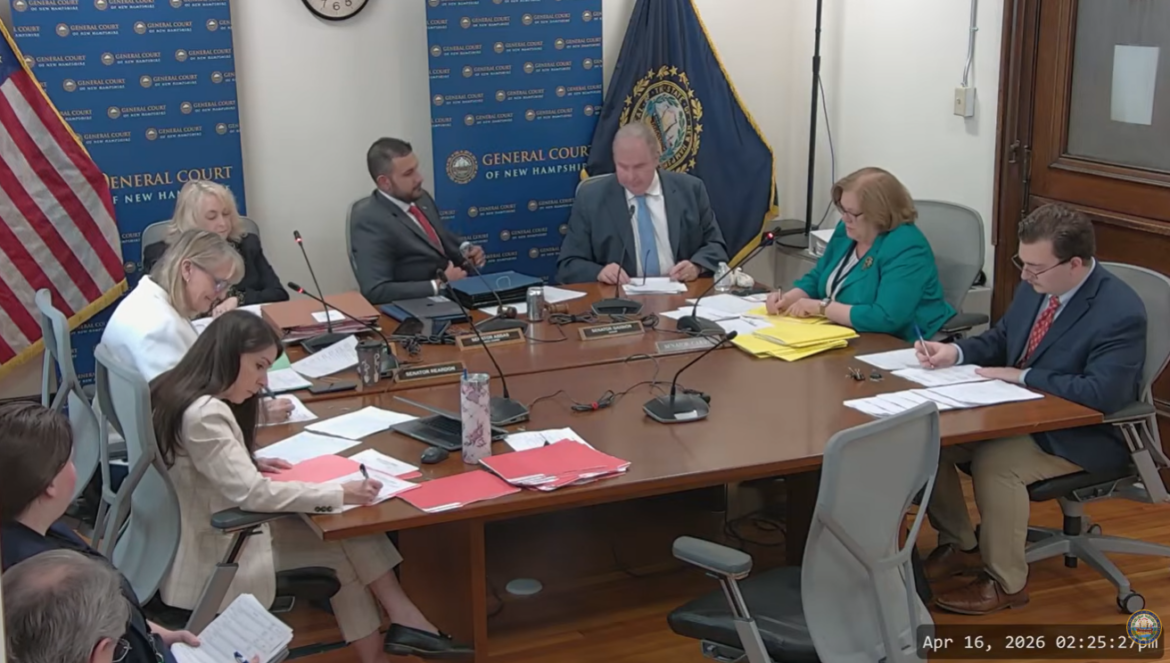
A bill that strengthens the teeth of getting the money from those perpetrators, House Bill 1576-FN, cleared a Senate committee unanimously Thursday and is likely headed to the Senate floor on the consent calendar and then likely to the desk of Republican Gov. Kelly Ayotte to be signed into law.
Also on Wednesday, the Governor and Executive Council approved a late item agenda to enter a three-year contract with a Chicago company to take over the process of data collection and disbursement which has been delayed due to software updates from another vendor that became incompatible and has delayed payments for months to all who are owed.
The $600,000 contract ($200,000 a year) will be paid for by the perpetrators through an upfront fee of 15 percent each time they write a check.
And a bill that sailed through a Senate committee Thursday would allow the state to annually review the perpetrator’s financial information, which currently the state does not do.
The bill’s sponsor state Rep. Kathleen Paquette, R-Manchester, herself a victim of crime receiving checks of varying amounts when they come at all – and they haven’t for months – said the two will work together to strengthen a system that she says is not well operated.
The state estimates 60 percent of perpetrators have not paid up in the past 60 days. As a victim, Rep. Paquette said she first thought the problem of not getting the check was only hers when she called the state.
But when she learned checks have not been going out for months to over 21,000 – everyone owed in the state, “I put on my legislative hat and said ‘I can do something about this.'”
“I feel like this is the homestretch,” she said in a telephone interview after the vote. “It’s there. Between today and yesterday it is a big win for victims of New Hampshire.”
Executive Councilor Janet Stevens, R-Rye who brought to light over a month ago the problem with the delayed checks, https://indepthnh.org/2026/03/10/executive-councilor-asks-ag-to-look-into-delayed-criminal-restitution-payments-to-victims/ said the state entered a prior contract with a company which when they upgrade to their system, the ability to send out restitution payments became problematic.
This vote Wednesday to go with FieldWare LLC https://media.sos.nh.gov/govcouncil/2026/0415/Late-Item-G-GC-Agenda-041526.pdf is going to allow for regular checks and to free up staff to do important work in the field collecting and working with county attorneys to get more money, Stevens said.
She said she was also hopeful along with Rep. Paquette that the system would be improved for victims.
Paquette said she knows of a woman, a state employee, who told her it has been 10 months since receiving a check.
“People can’t count on this money,” she said.
The staffing numbers within the Corrections restitution field office is only four while a decade ago there were up to 11 staffers, Stevens said.
House BILL 1576-FN “provides for new mechanisms for the enforcement of criminal restitution obligations, including mandatory financial reevaluation and additional penalties for noncompliance.”
Nicole Kipphut of Concord worked for the Department of Corrections and for many years said she was running the victim services unit. She testified before the Senate and House hearings and during an interview Thursday said that it was always very frustrating for the victims of crime because “there was not a great process in place.”
Victims were OK with getting monthly payments while perpetrators were incarcerated. She said they paid 10 percent of what was in their accounts. (Stevens notes that some states collect more than 20 percent while perpetrators are incarcerated.)
But once paroled, Kipphut said, often the payments stopped, that is when the victims would become very frustrated. Collections were difficult and the staff was understaffed, she said.
“Sometimes it was as low as $25 a month. It was an uphill battle,” she said, noting the staff was dealing with so many victims who were owed so much but who knew they just would not ever be paid fully due to the amount of time it would take.
“So I was super appreciative of the bill because it provided that transparency because there was a huge lack of transparency when it came to collections,” she said. “The transparency and consistency it provides for survivors is crucial but it also provides accountability for the department” of Corrections, Kipphut said.
“I always came from a restorative framework…and not just merely punitive because payments were tangible acknowledgement and a way for the offender to take responsibility and recognize the harm and try to repair and in some cases, not all, it was a bit of healing,” she said.
The idea to “make amends” works for victim and perpetrator and for the department which by law has the responsibility to see victims get what a judge decides they should get in terms of damages.
These four state worker positions which would be freed up by the bill are some of the best aspects to it, Kipphut said and there “will still need to be elements where humans are tied to the work.”
The bill states in its findings that “restitution is a court-ordered obligation intended to help victims recover from the harm caused by crime. The current statutory framework does not provide sufficient safeguards to ensure timely disbursement of restitution, consistent enforcement of payment obligations, or regular review of an offender’s ability to pay. Too often, victims are left waiting for payments or without clear communication regarding enforcement. It is therefore the purpose of this act to modernize New Hampshire’s restitution system by requiring mandatory financial reevaluations, strengthening enforcement mechanisms, improving victim communication, requiring prompt disbursement of collected funds, and extending restitution obligations to a victim’s estate when appropriate. These reforms are remedial in nature and shall apply to both current and future restitution orders, so that all victims may benefit from the protections herein provided.”
It calls for the following
– the department of corrections needs to conduct a mandatory reevaluation of each offender’s financial ability to pay restitution at least once every 12 months.
– If a reevaluation determines that the offender’s ability to pay has substantially increased, including but not limited to salary increases, lump sum payments, inheritance, settlement, or other financial gain, the department shall adjust the payment schedule upward within 30 days.
– The offender shall promptly notify the department of corrections of any change in their ability to pay that occurs outside the reevaluation period.
– For any incarcerated offender, the department of corrections shall automatically deduct 10 percent of all incoming monies from the offender’s resident account to pay restitution unless otherwise precluded by court order.
– In the event of noncompliance, the department of corrections shall initiate enforcement actions, which may include:
(1) Wage garnishment.
(2) Interception of tax refunds.
(3) Placement of liens on real property and assets.
(4) Referral to the appropriate prosecuting authority for consideration of prosecution for contempt, pursuant to RSA 651:67.
(b) Intentional non payment shall result in interest accruing on the unpaid balance at the civil judgment rate established pursuant to RSA 336:1, II, together with a financial penalty, as established by rule, designed to deter noncompliance.
– The department of corrections shall provide written notice to victims within 30 days of any re-evaluation results, payment schedule changes, or enforcement actions taken. In the absence of any change, the department of corrections shall provide quarterly payment status updates to victims unless the victim elects otherwise in writing.
– If restitution payments will be delayed for any reason, including administrative or technical delays, the department of corrections shall provide the victim with written notice explaining the reason for the delay and the expected payment date.
– The department of corrections, or any agent acting on its behalf, shall disburse all restitution payments to victims within 45 days of receipt of the funds from the offender or the offender’s financial institution. In the event that disbursement is disrupted for any reason, the department of corrections shall notify the victim in writing of the delay, the reason for the disruption, and the anticipated date of payment.
– The original prosecuting authority shall continue to provide victim services for the victim until all restitution orders have been fully satisfied.
The effective date if passed is June 1, 2027.
The Department of Corrections Commissioner explained the reason for the contract request and the problems which led up to the delay in payments to victims. A copy of it is here https://media.sos.nh.gov/govcouncil/2026/0415/Late-Item-G-GC-Agenda-041526.pdf
More information about the victims fund, who may be eligible and amounts they may be eligible for can be obtained here: https://www.doj.nh.gov/bureaus/victims-compensation-program