By PAULA TRACY, InDepthNH.org
NORTH CONWAY – It’s been a particularly good winter for the state’s outdoor economy, according to industry leaders who are looking at their own success and eyeing new federal data that shows its importance to the Granite State gross domestic product.
On Thursday, the federal Bureau of Economic Analysis released updated Outdoor Recreation Satellite Account data showing the industry accounts for 33,000 jobs statewide and contributes $4.2 billion in gross domestic product in 2024.
That represents about 3.5 of the entire state GDP, which is ranked sixth nationally in snow activities.
The data also highlights the diversity of outdoor recreation activities contributing to New Hampshire’s economy.
Leading sectors include snow recreation ($257 million), RVing ($253 million), hunting and shooting sports ($245 million), boating and fishing ($188 million), and hiking and camping ($83 million), demonstrating the breadth of outdoor recreation opportunities that support year-round economic activity.
Snowmobile trails have been open and groomed and access to more than 6,000 miles of trails is statewide. Get more information about snowmobiling here: https://www.nhstateparks.org/things-to-do/snowmobiling
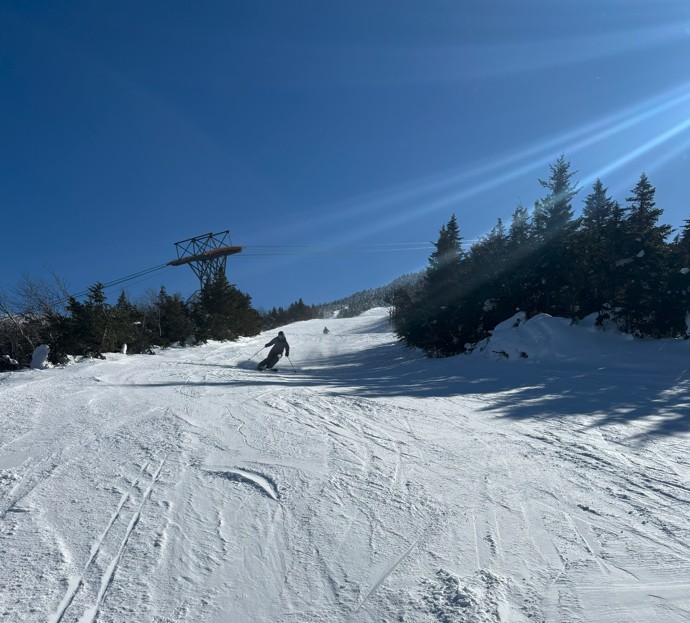
In the nation, New Hampshire is ranked sixth for winter outdoor economic impact. Jessyca Keeler, president of Ski NH, the statewide organization representing most ski areas, said skier visits are up significantly this winter due in large part to sustained cold and snow.
Ben Wilcox, president and general manager of Cranmore Mountain Resort, said particularly important this winter was the fact that the three most important times – Christmas, Martin Luther King Jr./Civil Rights Day, and February school vacation weeks – were times when the weather cooperated.
He said that business is up 9 percent year to date and that a lighted tubing park at the resort is up a staggering 35 percent year to date.
The strong data was celebrated by Granite Outdoor Alliance, which issued a coordinated press release with the NH Office of Outdoor Recreation Industry Development and U.S. Senator Jeanne Shaheen, who authorized the federal data collection.
The U.S. Department of Commerce’s Bureau of Economic Analysis said the outdoor industry generates approximately $1.8 billion in wages and compensation, and contributed $4.2 billion in value added in 2024.
“Reliable data like this allows New Hampshire to plan for growth,” said Janel Lawton, Director of the New Hampshire Office of Outdoor Recreation Industry Development. “Outdoor recreation grew 5.3 percent in 2024, nearly double the national rate. This sector continues to strengthen rural communities, support workforce development, and maintain New Hampshire’s competitive edge.”
Outdoor recreation plays a substantial role in New Hampshire’s economy. While the sector represents 2.4 percent of U.S. GDP, it accounts for 3.5 percent of New Hampshire’s economy, supporting roughly one in every 22 jobs statewide.
Nationally, outdoor recreation generated $696.7 billion in economic value in 2024, and when measured as total economic output, including travel spending, equipment manufacturing, retail activity, and supporting industries, the sector represents approximately $1.3 trillion across the U.S. economy.
“Outdoor recreation is not a peripheral sector in New Hampshire; it is a central pillar of our economic landscape,” said Tyler Ray, Director of Granite Outdoor Alliance. “These numbers reinforce what businesses and communities across the state already know: outdoor recreation drives jobs, supports small businesses, and fuels economic activity across New Hampshire. As we look ahead, maintaining our competitive edge will require treating this sector as a strategic economic asset and aligning policy, infrastructure, and workforce systems to support its long-term growth.”
“New Hampshire’s trails and backcountry landscapes are not only a cornerstone of the outdoor experience here, they are an important part of the state’s economy,” said Chris Thayer of the Appalachian Mountain Club. “With more than $83 million generated by hiking and camping activities alone, this data highlights how outdoor recreation supports local communities while reinforcing the importance of continued stewardship and investment in the trails and public lands that make these experiences possible.
“As AMC celebrates 150 years of bringing people together outdoors, we’re reminded that protecting and stewarding these landscapes is essential not only for recreation, but for the communities and economies that depend on them now and in the future.”
The Outdoor Recreation Satellite Account was authorized through bipartisan legislation led by U.S. Sen. Jeanne Shaheen to ensure consistent measurement of the industry’s economic impact nationwide.
“New Hampshire’s diverse outdoor spaces are what make the Granite State so special. From the shores of the Seacoast to our Lakes Region and the White Mountains, outdoor recreation enriches local economies, small businesses, and communities across our state,” said Sen. Shaheen. “As today’s report makes clear, New Hampshire’s outdoor economy is thriving.”
Keeler said in an email: “All in all, it’s been a really exciting ski season so far, and if the weather trend continues, I suspect we’ll continue to see good numbers as the season pushes on.
As of the end of January skier visits were up about 18 percent overall compared to last year, with 16 ski areas reporting weekly visits.
“While we don’t track revenues, I have heard on several occasions that revenues have been up as well across business units like lessons, rentals, Food and beverage, tubing, etc.”
Skiers and riders have also benefited from the fact that most trails have been open for much of the season and as spring skiing begins with warm temperatures and corn snow, the industry is hoping to ride it out a few more weeks, weather permitting.
Wilcox said that Cranmore is south facing and the snow goes quickly, but expects that it will be open for March and that other ski areas at higher elevations and different exposure may be able to stay open longer.